Kate Worthington wants nothing more than to go to India, despite the continuous persuasions of her mother and sister to get married. However, when she finds her plan to go becomes nearly impossible, she enlists the help of her childhood friend Henry Delafield to propose to her as a ruse while visiting his and his sister’s home. Little does Kate know that her presence there has a negative affect on Henry’s mother, who is suspicious of Kate since her sister is a rumored philanderer. Can Kate thwart the machinations of her own mother as well as avoid the nasty judgments of Mrs. Delafield and her friends, all while trying to combat the romantic stirrings for Henry that are beginning to take hold in her own heart?
While the characters are different, Blackmoore takes place during the same Regency period as Donaldson’s Edenbrooke.
Likes:
Unlike the predictability of Edenbrooke, although Blackmoore was dramatic, it was a bit darker than its predecessor. The character experienced joy but also more distress…something that was a bit different, which was refreshing.
The relationship between Kate and Henry. It reminded me of the relationship between Emma and Mr. Knightley in Jane Austen’s Emma. I love any friendship-turned-romance if done well.
Dislikes:
The heroine was a little more dramatic that I would have liked. Yes, her life is rather horrible, but she didn’t need to succumb to it that often. For a character who craved her own independence, a little more determination on her part would have been nice.
This book had the same sort of proper romance vibe as Edenbrooke, but I liked the relationship between the two protagonists much better. I’m interested to see what other period-era books Julianne Donaldson has written.
How refreshing it is to find romances out there that refrain from the smut that we so often see, even in “regency romances” (*cough* Bridgerton *cough*). Over the past year or so I’ve become a fan of the proper romances found at bookstores like Deseret Book, so it only made sense that I should check out one of the first ones that people always recommended me to read. I guess I feared that it would be a bit cliché, but I was surprised in that regard. Let’s take a look.
Summary
Marianne Daventry is a young woman living in the shadow of her confident and elegant twin sister Cecily. However, fortune begins to smile on her as she is named heir to her grandmother’s estate. But this fortune is not without its dangers; as young Miss Daventry struggles to avoid the danger that such an inheritance could bring, she meets a dashing young man who values her without the knowledge of her fortune. Can she believe that such a love could be possible without it?
Story: Despite its sometimes-predictable moments, the story is quite original and kept me intrigued enough to wonder what will happen to our heroine next.
Protagonist: Despite her sometimes damsel-in-distress-y attitude, she has moments of heroism and strength that make her a likeable character.
Love-Interest: Though the handsome Phillip Wyndham seemed like a rake at the beginning (as most regency love-interests seem to do), he is a likeable enough character who defends the honor of our heroine on more than one occasion, which never fails to make me go “Aww!”.
Author
Julianne Moore is the author of not just proper regency romances but also nonfictional books with gospel topics pertaining to the Church of Jesus Christ of Latter-day Saints. No doubt she received a lot of her inspiration for English regency settings from living next to a 500-year-old castle! (according to fantasticfiction.com and amazon.com)
Overall, I enjoyed listening to this book and look forward to reading the sequel to it titled Blackmoore. I recommend Edenbrooke to fans of Regency Era stories and romances alike, especially readers who are looking for nice clean romances.
The French Revolution has always fascinated me, so I have enjoyed finding books about fictional and real-life characters who lived through the tumultuous Reign of Terror that occurred during this period. I didn’t realize how many of these books are TBR’s (“to-be-read”), so I had better get cracking!
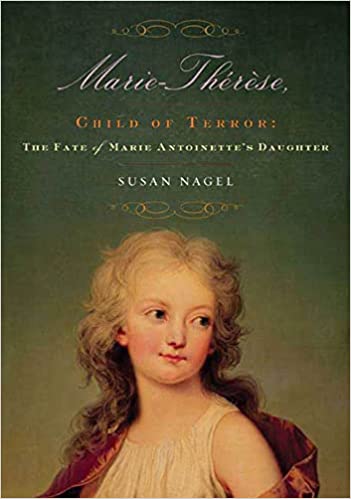
Marie-Therese, Child of Terror: The Fate of Marie Antoinette’s Daughter by Susan Nagel, Rosalyn Landor, et al.
I have always wondered what happened to the children of the man and woman who were so hated by their country for their extravagance that they were beheaded by their own subjects. Did they make it out alive? How? Were they forced to renounce their heritage like in The Scarlet Pimpernel? I’m glad to read an account like this where I have the chance to find out!
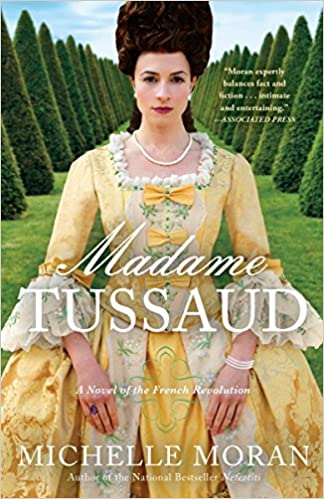
Madame Tussaud: A Novel of the French Revolution by Michelle Moran
I finally found this book! I had been wanting to read more about some of the more obscure characters of the French Revolution and this novel details the life of the woman who was forced to make wax figures of the aristocrats who lost their heads to Madame La Guillotine.
The Scarlet Pimpernel by Baroness Orczy
A beautiful actress seeks to thwart the plans of her former lover in his attempt to capture a mysterious hero known as The Scarlet Pimpernel, who frees countless victims of the guillotine right under the nose of the new Republic of France. This one I am proud to own because it is only the best piece of classic literature I have read. Between the characters, the setting, the hero, and the mystery, this is one novel that will remain timeless. I think this is the book that initially got me interested in this time-period when I was younger.
The Red Necklace by Sally Gardner
A young woman seeks to escape marriage to a ruthless count with the help of a young gypsy boy with supernatural powers amidst the backdrop of the French Revolution.
The Silver Blade by Sally Gardner
The sequel to The Red Necklace, this book continues the story of the star-crossed lovers who seek to thwart the ambitions of an evil count and help others escape the violent death of the French guillotine.
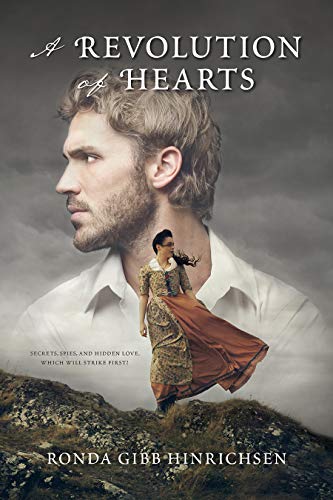
A Revolution of Hearts by Ronda Gibb Hinrichsen
This one I’m excited to read because it is a type of spin-off of The Scarlet Pimpernel where it is its own story but contains some of the characters from Orczy’s classic.
Hopefully I will be able to do some reviews for these soon once I’m done with a few of my Tudor-Era reads. If any of you have read any of these or recommend other French Revolutionary books, please let me know! Happy Reading!
“Just remember to have your inherently flawed heroes grow. Show us how, by the end, they ultimately climb out of their dark and troubled circumstances to find the greater light.”
Page 20
Where has this book been all my life? I’ve always been a fan of gothic literature, but I never really contemplated why, except maybe because I was just weird and creepy myself. Not long ago, I wanted to write about the purpose of gothic literature; particularly how it is meant to show audiences how characters seek to overcome the fear that plagues them in these stories. …And then voila! This book and author were recommended to me out of the blue as a sponsored ad on Facebook of all places.
In this “how to” book, author of creepy tales Mary Gray guides readers and authors through 14 short chapters about how to bring light to dark tales. Using suspenseful examples from her own books, she gives short and sweet instruction about how to write foreboding morbidity honestly and authentically and explains to the reader “why we need dark books”. At the end of the book, she also shares a checklist with some ideas for authors to get in the writing mood and lists some links where to find her other books.
Author
Christian author Mary Gray is the author of gothic tales like The Dollhouse Asylum and Our Sweet Guillotine, as well as some other instructional pieces of nonfiction like How to Write Clean Yet Scintillating Romance. She also edits creepy anthologies and can be found at www.monsterivy.com.
The time of year has come again where we can all nestle under our blankets and prepare ourselves to be scared silly as we watch those suspenseful films that are guaranteed to make us jump. For me, some of my favorites are the ones I think I have all figured out while watching, but then end up being totally hoodwinked at the end. So, here are some of my favorites (don’t worry, the endings will remain spoiler-free)!
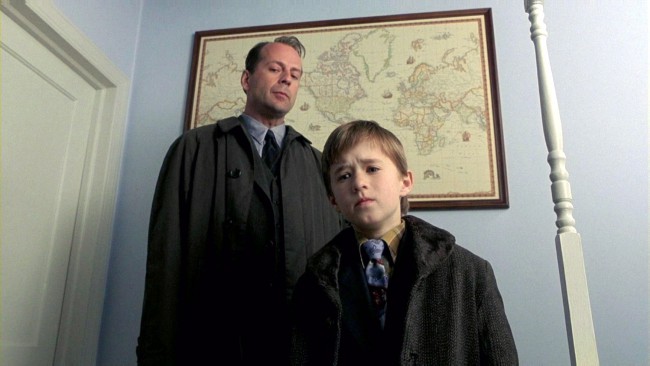
The Sixth Sense (1999)
Tribute.ca
This one remains a classic in my movie collection. The plot follows a young boy (Haley Joel Osmond) who can see and speak to the dead. However, after he encounters a psychologist (Bruce Willis) who strives to help him cope with his ability, we realize this man may not be what he seems.
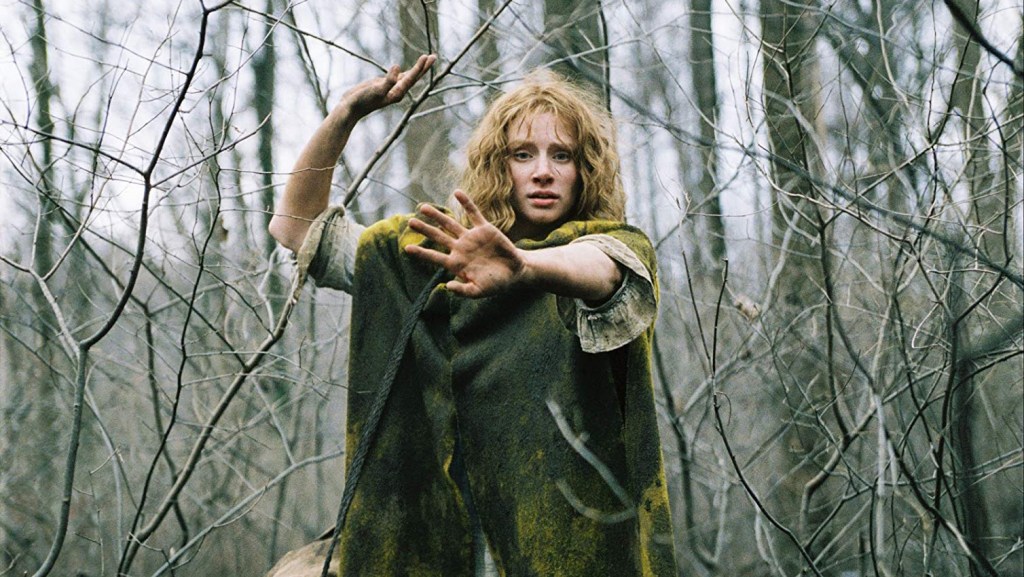
The Village (2004)
Moviefone
Can you tell I’m a fan of M. Night Shyamalan suspense? For those of you who loved the book The Giver, this film is right up your alley. In it, we meet a village of people (including stars like Joaquin Phoenix and Bryce Howard) who are terrorized by the legendary monsters that inhabit the surrounding woods. However, things are not as they seem to be…
Stonehearst Asylum (2014)
The Guardian
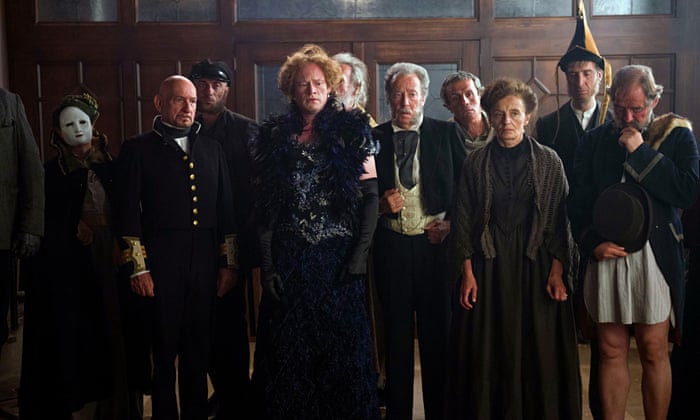
A young doctor (Jim Sturgess) arrives at an asylum determined to help the beautiful patient (Kate Beckinsale) that was presented to his board of doctors. However, he soon learns that the hospital has been taken over. But before you think I’ve ruined the premise, there are far more disturbing twists to be discovered. Unlike Shyamalan’s films, I did not expect a twist when watching this film, but I think it made it all the more engaging. This movie did what it was supposed to do in mystery thrillers by presenting subtle clues at the beginning and throughout the story that made the resolution more powerful. My thought I wonder why they showed that? was answered in a way I did not expect.
House at the End of the Street (2012)
Netflix
When a young woman (Jennifer Lawrence) and her mother (Elisabeth Shue) move in to a new home on a street that recently witnessed a brutal murder, she befriends her new neighbor (Max Thieriot), who is the son of the couple that was killed, in the hope of learning more about the mystery surrounding him. However, what seems like innocent friendship soon turns deadly as she realizes that he has something in mind for her that will unveil the mystery surrounding him and his family. This film offers clues first-off, making us believe that we know the story, only to have more surprises pop up later during the grand reveal during the film’s conclusion.
Winchester (2018)
Roger Ebert
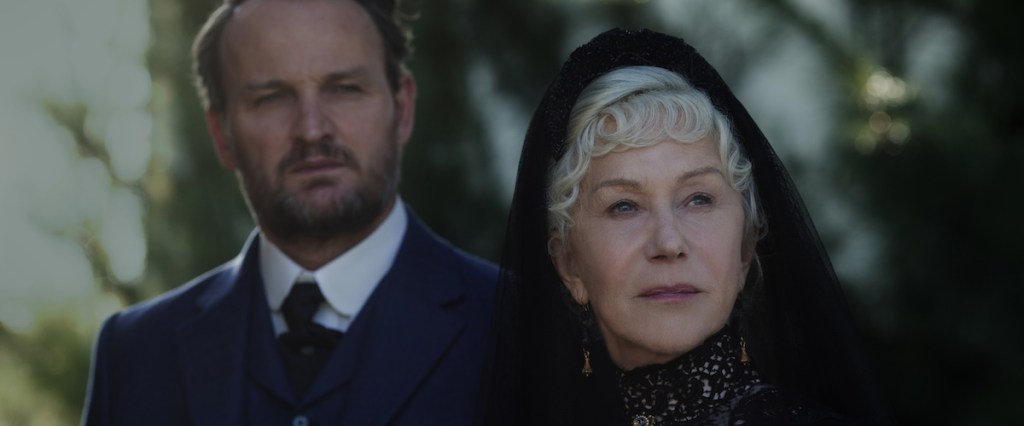
Convinced that the ghosts of past victims of the Winchester rifle are haunting her, the old heiress Sarah Winchester (played by Dame Helen Mirren), feels she must continually build a house to trap the spirits, so they will leave her in peace. Dr. Eric Price (Jason Clarke) gets more than he bargained for as he investigates the eeriness surrounding the famous Winchester Mystery House and we learn that he too has a stake in this twisted ghost story. What I liked about this plot was that it had a few main characters, but the story hit home for our male protagonist, who I initially thought was just an observer to Sarah Winchester’s story.
Harry Price: Ghost Hunter (TV Movie 2015)
ITV/Bentley Productions – IMDb.
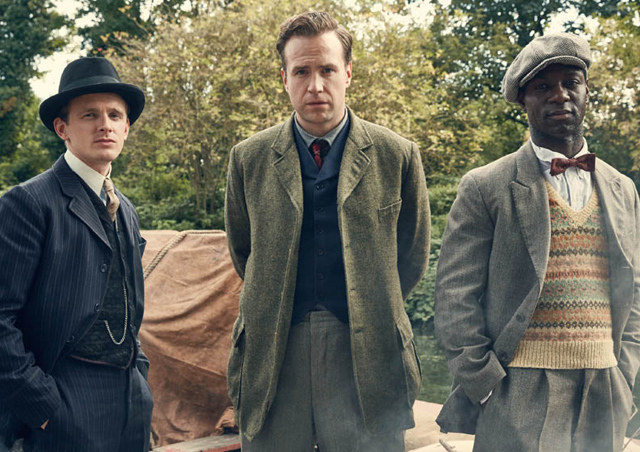
I found this Peacock Original by chance and liked it a lot more than its un-unique title would suggest. It takes place in the Edwardian era and follows ghost-hunter (Rafe Spall) and his quest to try to right a wrong made by him toward a previous client. When he meets a new challenge, a young woman (Cara Theobald) who claims she hears the voices of ghosts in her home, he learns the woman’s past is tied to the situation more than he initially realized.
If you like suspenseful movies with a twist and a satisfying resolution, I recommend that you check out these films this Halloween! If you know of other films in this genre that you think I may like, please comment below. Happy Haunting Season!
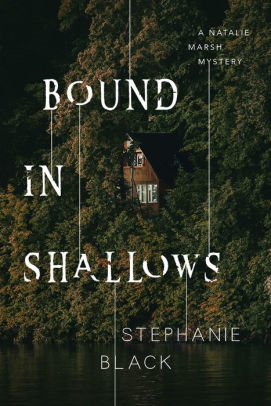
Mallory’s past has caught up with her as she tries to deflect the suspicion that has fallen upon her after drugs were mysteriously found in her room. Convinced that someone from her past is trying to frame her, she tries to uncover their identity with the help of her charismatic coworker Darien.
Length. I’m glad this was a novella, because I don’t think this story could have been drawn out any more than it was. The mystery was not complex enough to expand to a full-length novel, but the story was still engaging at this length.
Language. The author used simple language, the language that a teenager or young adult would use in daily life–albeit, no profanity, which was refreshing.
Family relations. While I was frustrated with her sister and brother-in-law for their distrust of the protagonist at the beginning, I began to understand where they were coming from as the story progressed and we got to see Mallory’s story unfold. It was nice to see how they were able to develop enough trust to help Mallory solve the mystery and find justice.
The reveals. I wish Black would have offered more background throughout the story instead of having the character reveal it when the story needed it. The reader could have tried to connect the clues as the story progressed instead of having information spill out when the author wanted it.
More from Stephanie Black
I am not very familiar with Stephanie Black’s work, but from what I understand, she is a Christian suspense writer. I thought reading one of her novella’s was a good way to get acquainted with her work, so I’m glad I was able to stumble across this read.
While a bit predictable in parts, this was still an engaging read and for its concise length I recommend anybody who likes clean suspense to give it a read or a listen. It is available as an eBook or audiobook on the Deseret Bookstore app Bookshelf PLUS.
If you are a mood-writer like me, then you may find it hard to find either the inspiration to write stories or the time to write. I know how annoying it can be to try and just sit there and wait for inspiration to come, so let’s brainstorm some ways that can help get those imagination juices flowing!
The hub of creativity, this is a great way to find story inspiration for the characters, scenes, and even costumes in your stories. To stay organized, feel free to create different storyboards for each story and sub-sections for characters, scenes, etc. Here is an example of one of mine.
3. Listen to podcasts.
(Especially ones that include commentary from authors who discuss their upcoming books or excerpts from their past stories) Writing advice is always helpful and there are podcasts for both writing and books, along with commentary about specific genres. Examples of these include: The Writer Files, Historical Fiction: Unpacked; grim & mild; I Should Be Writing; Book Talk, etc.
Go for a walk (especially while listening to your specific story inspiration music or writing podcasts). When you get your legs moving, it gets your brain moving, so take advantage!
5. Drive.
Of course, don’t write while you are driving. If you need to pull over and jot your ideas down, please do so safely.
This is one of the most effective ways for me to receive inspiration, not only for story plots and characters in specific genres, but also how to properly write those stories. Although it’s always nice to be original in how you decide to craft your story, it is also constructive to see what tools other authors have used to captivate their audiences and which ones are the most receptive from their audiences. Some devices that I like to use are perspective shifts, strong friendships, and concluding twists.
7. Watch movies specific to your writing genre.
This is especially true for me regarding gothic/suspenseful fiction. I’m a fan of M. Night Shyamalan-esk twists to creepy movies like the ones that exist in The Others (2001), The Village (2004), and Winchester (2018).
IMDB.com
CinemaBlend.com
Cosmopolitan.com
When I imagine a story, I imagine scenes of it like a movie, so it’s neat when movies, like books, succeed in showing and not telling the audience how the plot unfolds.
Sense & Sensibility (1995) from Letterboxd.com
8. Network with other writers.
Blogs, Facebook groups, and writing conferences are effective ways of finding people with similar writing or reading interests. Also, never exclude the possibly of meeting with a local creative writing group when possible (whether in person or over video conferencing).
9. Travel.
This is a great way to expand your vision and learning about other cultures and humanity in general. If you are a fantasy writer, learning about other civilizations can help you with your world-building. If you are a historical fiction writer, learning about the history of an ancient land can help you develop historical contexts for your stories.
Non-writers may think this is creepy, but watching how people interact in libraries, the park, school, work, church, etc. is an extremely helpful way to understand how people communicate, what they’re passionate about, and why they do what they do. Note, this is fuel for character-building…any other reasons for people-watching other than trying to understand the human condition WILL come off as creepy.
11. Free-write.
Sometimes writing without even thinking will result in words or stories that you didn’t even know were there locked away in your imagination. This way of writing can be effective along with writing from a prompt given from a random sentence, picture, or prop.
Sometimes writing about something completely different from stories (like essays, blogs, or even texts or emails) will develop your creativity and writing skills, not to mentions possibly make you want to write something different from your every-day mode of communicating.
So those are my top ideas for getting in the mood to write creatively! I hope these are helpful and if anybody has any ideas to add, feel free to comment!
Not too often do I find a nonfictional history account that checks almost all the boxes that I find intriguing in a history book, namely: theories, first-hand accounts, personal stories of the present along with stories of the past, and accounts that tie into Christian history (a subject I enjoy studying as well). However, this one happens to do so.
Summary
In this book Ballard relates the connections between the Book of Mormon and the European pilgrims that voyaged across the sea to America. In this hypothesis, through the symbolism, accounts, and personal testimony and travel experiences of the author, we learn about how the events that led up from the Great Apostasy down to the arrival of the pilgrims set the stage for the restoration of the Gospel of Jesus Christ in America.
Author
from C-SPAN.org
Tim Ballard had written a lot of books concerning American History that have a focused perspective regarding doctrine found in the Church of Jesus Christ of Latter-day Saints. An ex-government agent, he left his lofty government job to pursue a life of service as the founder of Operation Underground Railroad, an organization that coordinates operations to save children from human trafficking. In addition to this account, he has written two other books that focus on his “hypotheses” concerning American History, The Washington Hypothesis and The Lincoln Hypothesis.
Strengths
Knowledge of colonial history: specifically how it ties to the restoration of the Church of Jesus Christ in America.
Specific accounts of the founding fathers, who have ties to the church, like John Adams’ grandson obtaining a copy of the Book of Mormon and showcasing it in the library on the Adams’ estate.
Ballard mentions in the introduction that the hypothesis is biased.
Inclusion of symbolism, mainly concerning the unique hypothesis that England housed the “covenant people” descended from the biblical Isaac.
The fact that he narrated his own audiobook.
Weaknesses
Not very organized thought-process. Sometimes it seemed like he went from one point to another and then back again.
Sparse stories from or about colonial settlers. More accounts would have been neat to read about. It seemed like he breezed through them a bit.
Conclusion
Overall, I enjoyed learning about different connections between history and scripture that Ballard lighted upon in this book. After reading it, I realize there are a lot of places I need to still visit and pay attention to concerning the symbolism and history mentioned in this book. Well done, Tim!
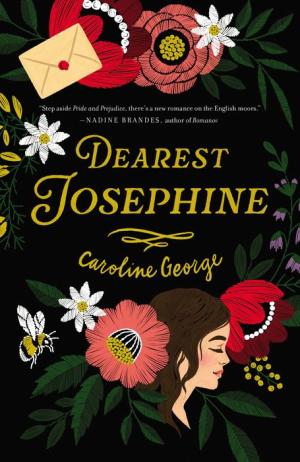
A proper romance and a modern mystery told through text messages, emails, letters, a novel. I try not to do spoilers in book reviews, but for this one, I can’t seem to help it since I didn’t give the 5/5 star-rating I initially wanted to do. It was a joy to read, and the suspense of the romantic mystery kept me reading, but I found myself disappointed by the rather inconclusive ending.
Summary
Josie De Clare has a lot on her plate after her dad’s passing: she has inherited a historical house in England and has the responsibility of fixing it up. However, upon doing so, she comes across a stack of 200-year-old letters which are all addressed to a Josephine De Clare from one of the house’s former residents, Elias. Determined to solve the mystery of this strange and impossible connection to her own identity, Josie enlists the help of her friends to help her research who exactly this Elias is and how it is possible that a man from 1820 knows a woman from the year 2020.
Likes
Concept – As a fan of time-travel, it was refreshing to read a romance with this theme that spans both the past and the recent present. And to be told through modern means of communication (texting and emails) was unique as well.
Writing – I normally am not a fan of reminiscent writing; it seems that most of the time the narrator gets lost in his or her own thoughts, but the language George uses in this memoir-style of storytelling gives us not too much or too little. When the characters are reminiscent, the language used is quite beautiful and sometimes witty.
Elias Quotes
“My novel keeps your memory close, Josephine. I hope you might read it one day. Whenever I sort through its chapters, I am reminded we are on the same page in different books, together in spirit despite our separate lives. I anticipate a day when our stories collide again.”
Elias letter (pg. 208)
“…I did in fact practice my dance steps, and I considered fleeing the house. No party is complete without at least one escape attempt.”
Elias letter (pg. 74)
“I have kept the facts a secret, for the truth is raw, and people prefer their truth seasoned, marinated, and cooked medium-well.”
Elias letter (pg. 77)
“…Books are but reflections of us.”
Elias letter (pg. 117)
“…One’s belief cannot be allowed to suffocate under the tyranny of small minds, for hope itself does not hinge on the faith of the masses, rather the singular soul.”
Elias letter (pg. 165)
Characters – George gave each main character had a voice all their own and this diversity made the story a joy to read.
Discussion Questions – (The only part of the ending I was a fan of) I like it when books—usually ones with abrupt endings like this one—list some questions for further thought and discussion after the story ends. These are nice to ask one another in group book discussions or for personal reflection.
Dislikes
Ending (with spoiler)
“After everything we have endured, I must cling to the belief that our stories will collide in the end.”
Elias letter (pg. 119)
Spoiler: they don’t. The book ends with a conclusion that another character makes up some unanswered questions on my part that include: Where is the rest of the manuscript? Which version of the first meeting between Elias and Josephine was correct? And, of course, What the heck was the connection between Elias and the modern-day Josie? Was there even a connection?
Conclusion
My initial excitement over the mystery of this story came to an abrupt halt and I find myself rather disappointed that the mystery between Elias and Josie’s connection was never really resolved. It seems like it was building up to this amazing conclusion and then it ends with: (spoiler) oh, they both just end up with different people so forget everything you just read… I tend to like books with at least a little bit of closure at the end and though I liked the writing in this novel, the overall story left me with a “what?” feeling.
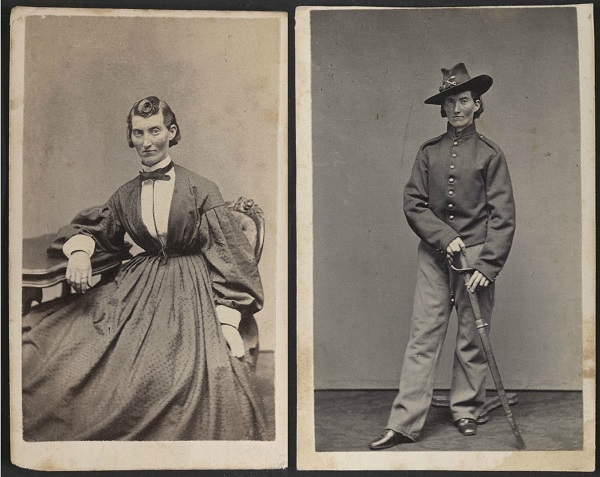
This novel is a collection of accounts of the women of the American Civil War, many of whom are not well-known. We follow women of both the North and the South who made sacrifices for what they felt was for the good of their country. These are the women who enlisted themselves as disguised soldiers, escaped slavery, became diarists, were employed as doctors and nurses as well as women with holy professions, and those who hailed from Native American origins as well.
Author
Marianne Monson has written a lot about American History in the genres of nonfiction, young adult historical fiction, and children’s historical fiction/fantasy, based on the titles of hers I have already seen at Deseret Book. Some of her other titles include Frontier Grit: The Unlikely True Stories of Daring Pioneer Women (Nonfiction), Her Quiet Revolution: A Novel of Martha Hughes Cannon: Frontier Doctor and First Female State Senator (YA Historical Fiction), and The Enchanted Tunnel Series (Children’s Historical Fiction/Fantasy). From my judgments of this book, I like her style of writing; she gives her readers enough information without overwhelming the reader. I look forward to reading some of her other nonfiction.
Union – probably the Women’s Brigade. ancestralfindings.com/women-civil-war/
Book Strengths
No info-dumps (“show, not tell”): these were more teasers rather than full biographies
Well-researched: a nice compilation of sources is listed at the back
Inclusive: she includes women of various backgrounds, cultures, and races in her research
Narration: I listened to this via audiobook; and thought the interested tone, steady pacing, and charisma of the voice kept the story interesting.
Book Weaknesses
Not many, just one suggestion: I think I would have liked if it read more like a novel instead of a narration in certain parts.
I learned a lot more about the historical context of the American Civil War in this book than I thought I would, such as the origins of Arlington Cemetery, the large number of women who enlisted alongside their husbands and had babies while still enlisted, the fact that there were women doctors, and accounts from the Confederate side of the war. I especially liked when Monson referenced her own account of an interaction with a man at a Fredericksburg gift shop who teased her about choosing a side when she bought postcards of both Grant (a Northerner) and Lee (a Southerner).
“‘I respect both these men,’ I said returning his banter, ‘and the war is over now, so I don’t have to choose.”’
Women of the Blue and Gray, page 380-381
I think this is an appropriate attitude when learning about a topic as touchy and complicated in our nation’s history as the American Civil War; one must learn the good and the bad unbiased facts from both sides before making an educated decision about which ideals to support and which to not.