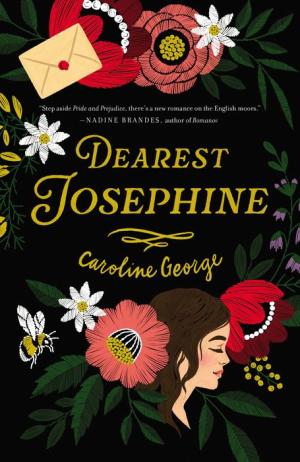

Book Review: Dearest Josephine by Caroline George

Rating: 3.5 out of 5.

“Please do not be a ghost.”

Elias letter (p. 78)

A proper romance and a modern mystery told through text messages, emails, letters, a novel. I try not to do spoilers in book reviews, but for this one, I can’t seem to help it since I didn’t give the 5/5 star-rating I initially wanted to do. It was a joy to read, and the suspense of the romantic mystery kept me reading, but I found myself disappointed by the rather inconclusive ending.

Summary

Josie De Clare has a lot on her plate after her dad’s passing: she has inherited a historical house in England and has the responsibility of fixing it up. However, upon doing so, she comes across a stack of 200-year-old letters which are all addressed to a Josephine De Clare from one of the house’s former residents, Elias. Determined to solve the mystery of this strange and impossible connection to her own identity, Josie enlists the help of her friends to help her research who exactly this Elias is and how it is possible that a man from 1820 knows a woman from the year 2020.

Likes

Concept – As a fan of time-travel, it was refreshing to read a romance with this theme that spans both the past and the recent present. And to be told through modern means of communication (texting and emails) was unique as well.

Writing – I normally am not a fan of reminiscent writing; it seems that most of the time the narrator gets lost in his or her own thoughts, but the language George uses in this memoir-style of storytelling gives us not too much or too little. When the characters are reminiscent, the language used is quite beautiful and sometimes witty.

Elias Quotes

“My novel keeps your memory close, Josephine. I hope you might read it one day. Whenever I sort through its chapters, I am reminded we are on the same page in different books, together in spirit despite our separate lives. I anticipate a day when our stories collide again.”

Elias letter (pg. 208)

“…I did in fact practice my dance steps, and I considered fleeing the house. No party is complete without at least one escape attempt.”

Elias letter (pg. 74)

“I have kept the facts a secret, for the truth is raw, and people prefer their truth seasoned, marinated, and cooked medium-well.”

Elias letter (pg. 77)

“…Books are but reflections of us.”

Elias letter (pg. 117)

“…One’s belief cannot be allowed to suffocate under the tyranny of small minds, for hope itself does not hinge on the faith of the masses, rather the singular soul.”

Elias letter (pg. 165)

Characters – George gave each main character had a voice all their own and this diversity made the story a joy to read.

Discussion Questions – (The only part of the ending I was a fan of) I like it when books—usually ones with abrupt endings like this one—list some questions for further thought and discussion after the story ends. These are nice to ask one another in group book discussions or for personal reflection.

Dislikes

Ending (with spoiler)

“After everything we have endured, I must cling to the belief that our stories will collide in the end.”

Elias letter (pg. 119)

Spoiler: they don’t. The book ends with a conclusion that another character makes up some unanswered questions on my part that include: Where is the rest of the manuscript? Which version of the first meeting between Elias and Josephine was correct? And, of course, What the heck was the connection between Elias and the modern-day Josie? Was there even a connection?

Conclusion

My initial excitement over the mystery of this story came to an abrupt halt and I find myself rather disappointed that the mystery between Elias and Josie’s connection was never really resolved. It seems like it was building up to this amazing conclusion and then it ends with: (spoiler) oh, they both just end up with different people so forget everything you just read… I tend to like books with at least a little bit of closure at the end and though I liked the writing in this novel, the overall story left me with a “what?” feeling.

Book Review: Women of the Blue and Gray: True Civil War Stories of Mothers, Medics, Soldiers, and Spies by Marianne Monson

Rating: 5 out of 5.

Summary

This novel is a collection of accounts of the women of the American Civil War, many of whom are not well-known. We follow women of both the North and the South who made sacrifices for what they felt was for the good of their country. These are the women who enlisted themselves as disguised soldiers, escaped slavery, became diarists, were employed as doctors and nurses as well as women with holy professions, and those who hailed from Native American origins as well.

Author

Marianne Monson has written a lot about American History in the genres of nonfiction, young adult historical fiction, and children’s historical fiction/fantasy, based on the titles of hers I have already seen at Deseret Book. Some of her other titles include Frontier Grit: The Unlikely True Stories of Daring Pioneer Women (Nonfiction), Her Quiet Revolution: A Novel of Martha Hughes Cannon: Frontier Doctor and First Female State Senator (YA Historical Fiction), and The Enchanted Tunnel Series (Children’s Historical Fiction/Fantasy). From my judgments of this book, I like her style of writing; she gives her readers enough information without overwhelming the reader. I look forward to reading some of her other nonfiction.

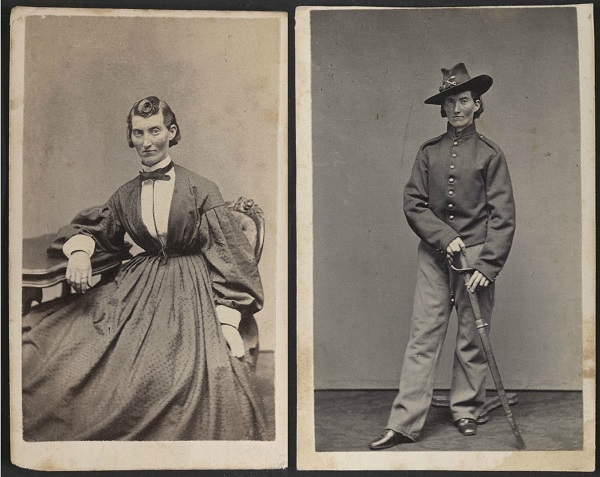
Union – probably the Women’s Brigade. ancestralfindings.com/women-civil-war/

Book Strengths

  • No info-dumps (“show, not tell”): these were more teasers rather than full biographies
  • Well-researched: a nice compilation of sources is listed at the back
  • Inclusive: she includes women of various backgrounds, cultures, and races in her research
  • Narration: I listened to this via audiobook; and thought the interested tone, steady pacing, and charisma of the voice kept the story interesting.

Book Weaknesses

  • Not many, just one suggestion: I think I would have liked if it read more like a novel instead of a narration in certain parts.

Overall Thoughts

I learned a lot more about the historical context of the American Civil War in this book than I thought I would, such as the origins of Arlington Cemetery, the large number of women who enlisted alongside their husbands and had babies while still enlisted, the fact that there were women doctors, and accounts from the Confederate side of the war. I especially liked when Monson referenced her own account of an interaction with a man at a Fredericksburg gift shop who teased her about choosing a side when she bought postcards of both Grant (a Northerner) and Lee (a Southerner).

“‘I respect both these men,’ I said returning his banter, ‘and the war is over now, so I don’t have to choose.”’

Women of the Blue and Gray, page 380-381

I think this is an appropriate attitude when learning about a topic as touchy and complicated in our nation’s history as the American Civil War; one must learn the good and the bad unbiased facts from both sides before making an educated decision about which ideals to support and which to not.

10 Time-Travel Titles at Deseret Book

Time-travel is a subject I love reading about in books, so, naturally, I researched some of the books that concern fictional time-travel located at the bookstore where I work. Here are a few of the titles for those of you looking for more time-travel inspired tales.

Young Adult Fiction

Dearest Josephine by Caroline George

While this tale does not deal directly with time-travel as a scientific idea, this book’s “The Lake House” vibes tell a story about the love story of a young woman from 2020 and a young man living in 1820.

Teen Fiction

Waterfall by Lisa T. Bergren

This is the first book in Bergren’s “River of Time” series, where the daughter of a modern-day archeologist finds herself back in 14th-century, war-torn Italy.

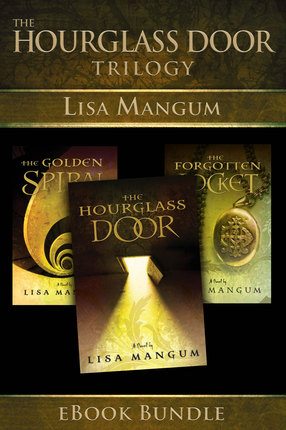
The Hourglass Door Trilogy (3 Volumes) by Lisa Mangum

The books contained in this series (The Hourglass Door, The Golden Spiral, and The Forgotten Locket) follow a young woman’s encounter with five Italian time-travelers and the romance she develops with one of them. She literally races against time as she strives to protect him from those who are trying to destroy him and her own life as well. This story is not your typical time-machine story as it involves a door, Leonardo Di Vinci, and a river of time.

Kind of a Big Deal by Shannon Hale

This is not necessarily a time-travel novel but could be classified as such due to the book time-traveling the heroine experiences as she literally fills the shoes of the characters she reads about.

Passage to Zarahemla by Chris Heimerdinger

(This book is followed by a sequel, Escape from Zarahemla) Two runaway orphans flee to a safe haven at the edge of the woods, only to find that it may not be as safe as they thought as they encounter a parallel universe with the past. They soon find themselves among men and women from the time of the Book of Mormon and seek to return home before the lines between present and past become blurred forever.

Tennis Shoes Adventure Series (13 Volumes) by Chris Heimerdinger

Two children find themselves back in the time of the Book of Mormon, where they encounter Nephites, Lamanites, and a whole bundle of dangerous, spiritual, life-changing adventures.

Middle Grade

The World between Blinks by Amie Kaufman and Ryan Graudin

This tale stretches the bounds of time and space as two children find themselves in a realm where lost things are found.

Beginning Reader

Believe and You’re There Series (10 Volumes) by Alice W. Johnson and Allison H. Warner

Follow the adventures of three children as they journey back in time through their grandmother’s mysterious paintings and witness events from the Old Testament, the New Testament, and The Book of Mormon.

The Enchanted Tunnel Series (4 Volumes) by Marianne Monson

Like Johnson and Warner’s series, these books follow the adventures of time-traveling children as they find a passageway at their church building that leads to events in LDS history, including the trek of the pioneers, the miracles of Jesus in Jerusalem, and the exodus of the Israelites from Egypt.

Magic Tree House Series (51 Volumes) by Mary Pope Osborne

While not all the stories in this series deal with time-travel necessarily, a magical tree house takes children to various times and places where they embark on dangerous missions to solve mysteries and return home safely.

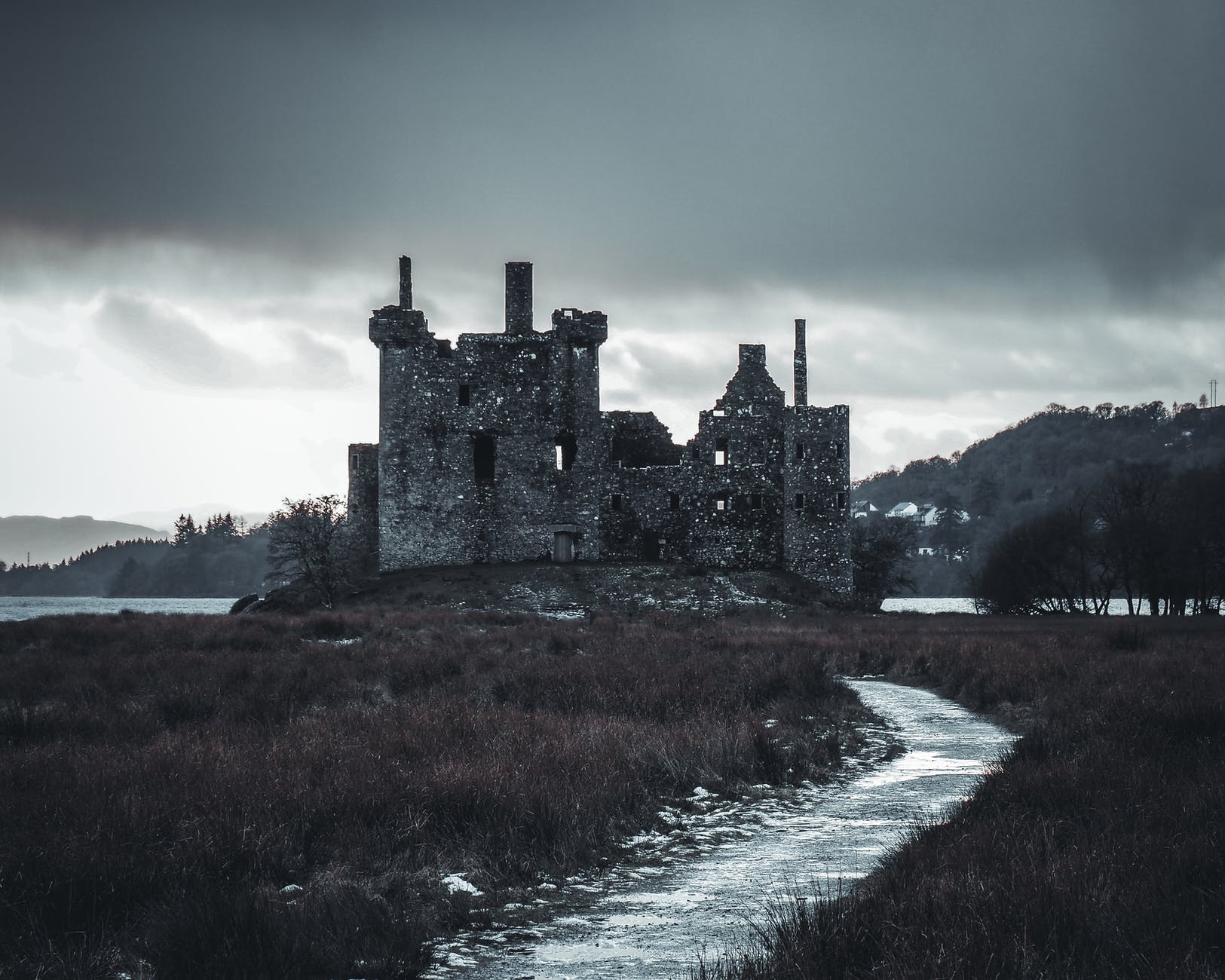
Book Review: Danger on the Loch, by Paige Edwards

Rating: 4 out of 5.

It’s about time I read one of the suspense novels I keep recommending at the bookstore where I work. I picked this novel to read for three reasons:

  1. The genre: Suspense. I’ve been wanting to read more suspense novels, since suspense is a genre that I like writing as well as watching in film.
  2. The setting: Scotland. I will read anything (well, almost anything) that takes place in Great Britain, so this was pretty much a given for me.
  3. Christian author. It’s not every day that a suspense novel is told through a Christian lens, so I’m happy that this was a factor.

Summary

American photographer Paisley has never felt close to her mother, but when her estranged father contacts her from out of the blue, she travels to Scotland to meet him…only to find out that he is a lord and that she is, therefore, a lady. However, things are not as they seem as she and her best friend James find themselves in the middle of a terrorist plot to overthrow her family. Amidst the growing attraction they begin to feel towards each other, Paisley and James seek to discover the identity of their enemy and thwart the devious plans before it is too late.

Likes

Characters: I was surprised at the range of characters included in this book and how each of them contributed to the plot of the story. It isn’t easy to create fleshed-out side-characters (some of which are only shown for a scene or two), but these persons with different goals, nationalities, and personalities all made the story more believable and original in my opinion. Since I listened to this as an audiobook, I also like how the narrator read each character’s voice in a different accent, even those who had the same Scottish dialects.

Main Character: This is a bit biased, because I could identify with her in more ways than one, which is why she appealed to me. For example, she, like me, was older and no longer in school, was very short, and also a member of my church. This was enough to keep my interest piqued in her story.

LDS References: Since the main characters in this book were members of my own faith, it was nice to also connect with how they hinted at church principles here and there, but never got too preachy which was nice for audiences who may not want a book with a bunch of “Mormon” info-dumps. Some of these included when Paisley and James prayed for deliverance from their potential captors at the seaside, the subtle reference to James’s church mission, Paisley’s desire to dress modestly for her father’s ball, and the offense Paisley’s father felt when she declined alcohol due to her religious beliefs.

Plot/Setting: As I mentioned before, I was initially drawn to the Great Britain setting because I am a big English History buff, but I was impressed with how well the author researched the setting, culture, and even criminal terminology for this book. I was also impressed that she included a Scottish Glossary at the beginning of the novel for further possible culture-clash clarification throughout the story.

Dislikes

Paisley and James’s Relationship: I don’t want to say I disliked it, but I can’t honestly say that I liked it either. I am more attracted to reading about relationships that develop from the beginning of their first meeting, versus relationships that have their backstory covered by past reflections from the main character. But that’s my own personal opinion.  

Common “Cinderella Story” Theme: I have seen this premise occur time and time again in storybooks and films (Princess Diaries, etc.), so it was kind of a let-down to see the main character suddenly have her life change by realizing that she is in fact a “princess”. Surprise, but not really.

Conclusion

Even though this novel’s story had a plot that we have seen before, it was still an original, suspenseful, Christian take on a “Cinderella” tale. It had a cast of characters diverse enough to add flavor to the story and the author did a great job researching the Scottish setting and customs as well as appropriately using crime jargon that associated the characters with the more criminal/legal aspects of the story’s mystery.

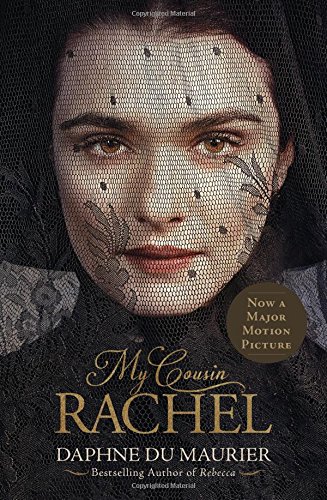
Movie Adaptation Review: “My Cousin Rachel” (2017)

“She has done for me at last, Rachel my torment.”

My Cousin Rachel

Rating: 3 out of 5.

First off, it is quite embarrassing how behind I have been posting blogs these past couple of months, so I apologize. A plan is in motion to get back into my reading routine so hopefully I will be posting some book reviews soon!

I read My Cousin Rachel earlier this year and had wanted to watch the movie to see the comparison. However, I find that I am somewhat disappointed.

Book vs. Film

Cast

Sam Claflin as Phillip – I tend to like Claflin in anything due to his acting range and ability to perform diverse roles. However, the jealous rather tempestuous Philip that he portrayed in this film was more disappointing to me than the sad sap I felt sorry for in the book. Whether the moody Phillip that was created for the film was Claflin’s fault or that of the director/screenwriters is unknown to me, but I wasn’t a fan of the character, no matter how well Claflin portrayed him. I did like that he played both Phillip and his cousin Ambrose to show the parallels of Rachel’s destruction.

My Cousin Rachel Reviews - Metacritic
From metacritic.com

Rachel Weisz as Cousin Rachel – Weisz also gave a good performance, though she did not seem as shy as she was portrayed in the book; I wonder if the film creators wanted her character to have a more “modern” appeal to audiences as a sociable and quick-witted woman instead of a quiet and demure one.

Aesthetic

I think the film nailed the gothic mood of the setting. The mild weather, dark lighting of the house, and era-appropriate costumes all contributed to the overall lighthearted, yet sinister, mood of the movie.

My Cousin Rachel: Daphne du Maurier's take on the sinister power of sex |  Books | The Guardian
From theguardian.com

Differences *spoilers*

Rebecca’s demise. I’m not sure whether I preferred the ending of the book or the film. In the book, Rachel dies after a bridge collapses, while in the movie, a foreshadowed cliff collapse was used for her demise. Although I liked how the fall was foreshadowed by Phillip nearly falling off the same way, I felt sorrier for Rachel’s poor horse.

Louise. While Louise did not seem as present in the book as in the movie, I was glad to see her as the voice of reason to the annoyingly whiny Phillip. She quickly became my favorite character because of this. I do not recall her ever conversing with Phillip in the book, so it was a nice addition.

My Cousin Rachel, 2017 Edition –
From thecultureconcept.com

Additional sex scene. In the book when Phillip went to bed with Rachel, it never revealed any details, just that they slept together…which is enough information for me as a reader. In the movie, they also made this a non-explicit scene, which I was relieved about. However, the additional scene the following day was not something I wanted in the film and did not understand why another sex scene was included; the addition of it just made me hate Phillip even more since the uncomfortable expression on Rachel’s face made it seem more like rape.

Rainaldi. I don’t remember Rainaldi being gay…was this just for the movie?

My Cousin Rachel (2017) - Photo Gallery - IMDb
From imdb.com

Overall, this was an okay adaptation, but I was not a fan of some of the changes they made to an otherwise good story; the protagonist was static and rather unlikeable, the villain was more appealing than the protagonist (as the film creators no doubt tried very hard to do), and the additional scenes didn’t seem to help the story progress. It was visually appealing for what it was, regarding the scenery and overall gothic mood of the story, but other than that the adaptation was “meh” to me.

Content Advisory

Language:2/5 (swearing a couple of times; words like “da*n”)
Sex:3/5
Violence:3/5 (some thematic violence; ex. a horse gets shot)
Gore:3/5

April 2021 Reading Blog

It’s been a hot minute since I’ve attempted one of these, but I’ve been reading a lot of books this last month so I thought, “It’s time”. I’ve used a podcast format for the first time on my blog to discuss these books and included my personal thoughts about them thus far. I’ve listed them and their summary links below.

Let’s have a listen!

The House of the Seven Gables, by Nathaniel Hawthorne (Librivox Recording read by Mark Smith)

Book Review: The Red Necklace by Susan Gardner

Rating: 4.5 out of 5.

Finally! I have never felt more accomplished finishing a book. For some reason this book took me a while to complete, not for lack of interest, but simply due to finding the time to go back to it while trying to read/finish library books. This novel takes place in one of my favorite eras to read about in history: the French Revolution. Ever since reading The Scarlet Pimpernel, I was fascinated with the men and women who sought to escape and free others from the guillotine during the Ancien Régime. This story is very original in context and weaves together historical themes as well as gypsy magic and other fantastical elements.

Summary

Sido has lived her whole life as the quiet, obedient daughter of a marquis. Born with a limp, she never saw much value in herself thanks to her father’s condescending comments. That is, until she helps a young gypsy entertainer named Yann escape the clutches of her father’s dark counterpart, an evil count bent on harnessing the supernatural skills Yann possesses. However, Sido soon finds herself in danger as the count makes a deal with her father for her hand in marriage. Using his special abilities and quick wit, Yann and his friends form a plan to rescue Sido not only from the clutches of the evil count, but also from the revolution that has begun to boil in the hearts of Sido’s fellow French citizens.

Likes

The Language is so beautiful and original; it kept drawing me back to the story. The author incorporated vivid descriptions not overly used in other books, such as,

“She looked at him, her head to one side, wondering for a moment if hunger had made her hallucinate or whether it was just an incredible longing to see him again that had conjured up this apparition that stood before her.”

~ Page 243

She also sprinkles throughout the story wise phrases from the characters, which, I think, add a certain depth to their characters. Examples include:

“Many men…spend their lives in the wrong corner of their souls, mainly out of fear of what they might find on the other side.”

~ Mr. Trippen, pg. 201

“What’s the point of playing at politics? All that matters is people.”

~ Yann, pg. 195

POV. Certain characters tell the story better through what they are feeling, doing, or thinking. I like stories that switch the focus back and forth between the main characters; not necessarily from their own point of view, but from that of the third person; a narration that describes what they are doing to help guide the story better from each person’s perspective.

Dislikes

Magic. This is a bit of a stretch here, because I do like the fact that the author chose to interweave magical elements, but it took me a bit to try and visualize the type of magic she was talking about. When Yann meets the Sisters Macabre it got me wondering, are these corpses, inanimate dolls, or what? Sometimes it seemed like the author assumed the reader knew what she was talking about and was a little vague on description.

Conclusion

I would recommend this story to those who are fans like myself of learning about the French Revolution and those who like stories of camaraderie and rescues. I’m glad that the damsel in distress was still a strong character, despite her situation and hope to see her character develop more in the next book of the series, The Silver Blade.

7 Favorite Fairytale Retelling Picture Books from Childhood

Fairytale retellings are some of my favorite pieces of literature to read. Many that I have come across remain original and clever, despite being based off of well-known tales. I’ve listed some of my favorites below. Let’s take a look!

#1. The Frog Prince Continued

https://www.the-best-childrens-books.org/The-Frog-Prince-Continued.html

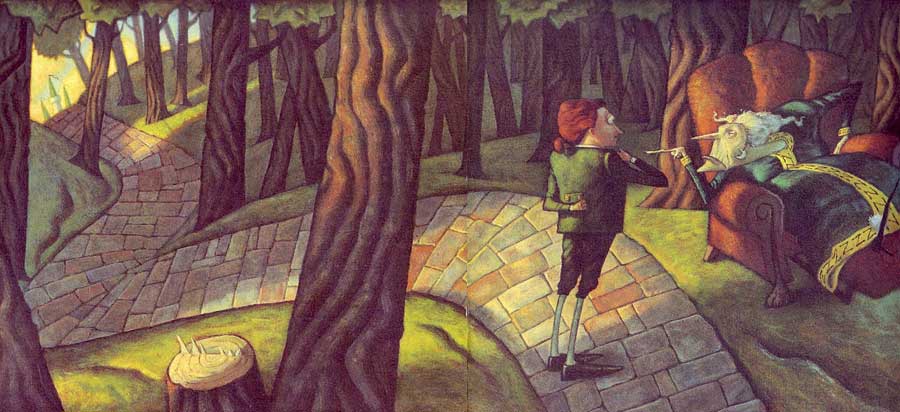
This story interweaves not just the tale of The Princess and The Frog, but many others as well, like Hansel and Gretel and Snow White. I particularly liked how the story included the villains of these tales. The unique artwork, with its occasional subtleties and Easter eggs also kept me engaged.

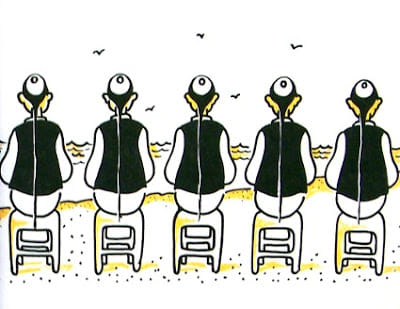
#2. The True Story of the Three Little Pigs

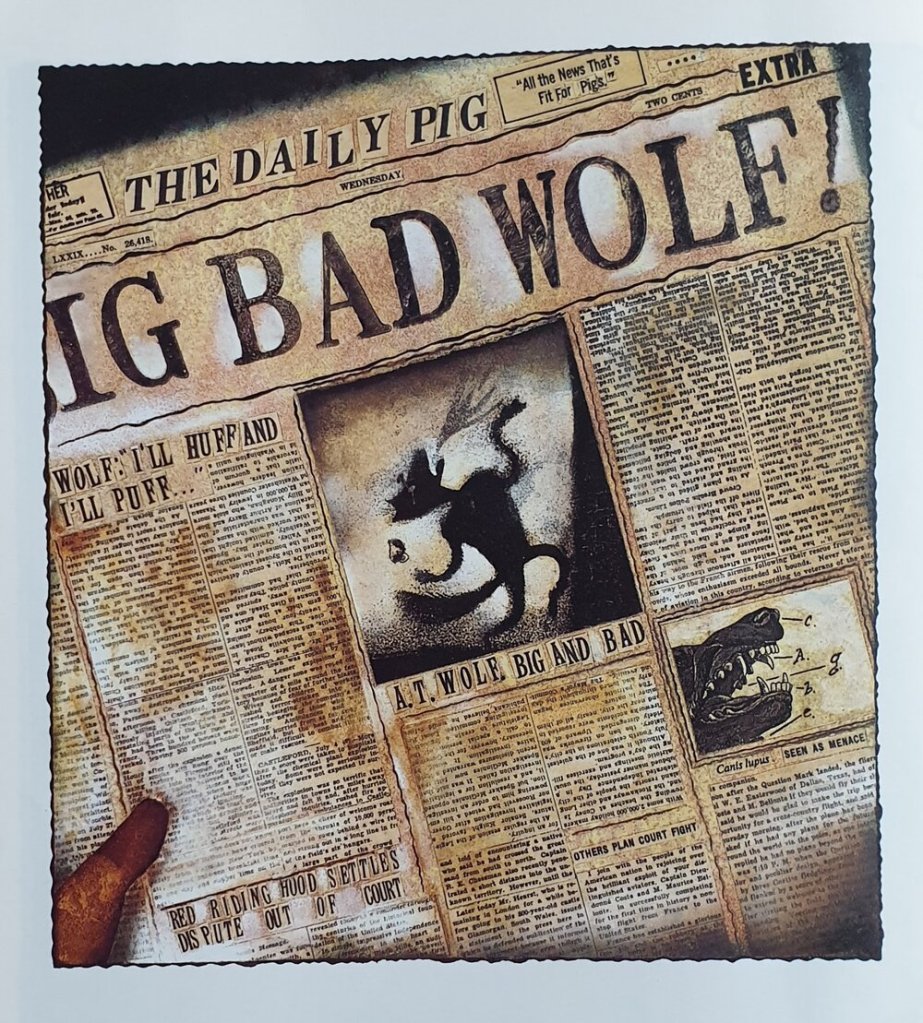
The artwork in this one didn’t have a very broad color palette, but I still enjoyed the pictures as a child. I also appreciated the humor in the language given by the wolf as he makes himself out to be the victim in the story.

#3. The Three Little Wolves and The Big Bad Pig

https://www.facebook.com/pg/The-Three-Little-Wolves-and-the-Big-Bad-Pig-1475263119222135/posts/

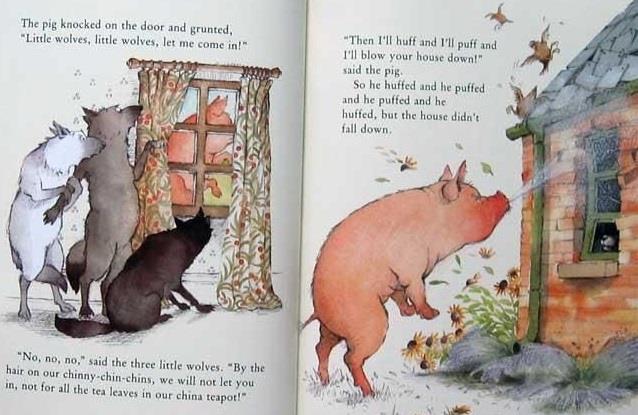
I thought this story was a clever spin on the classic tale that took a more modern twist. The author turns the tale on its head by making everything an opposite, including the effectiveness of the materials the wolves used to build their many homes to protect themselves from the Big Bad Pig.

#4. The Paper Bag Princess

https://www.huffingtonpost.ca/2016/06/29/paper-bag-princess_n_10738606.html

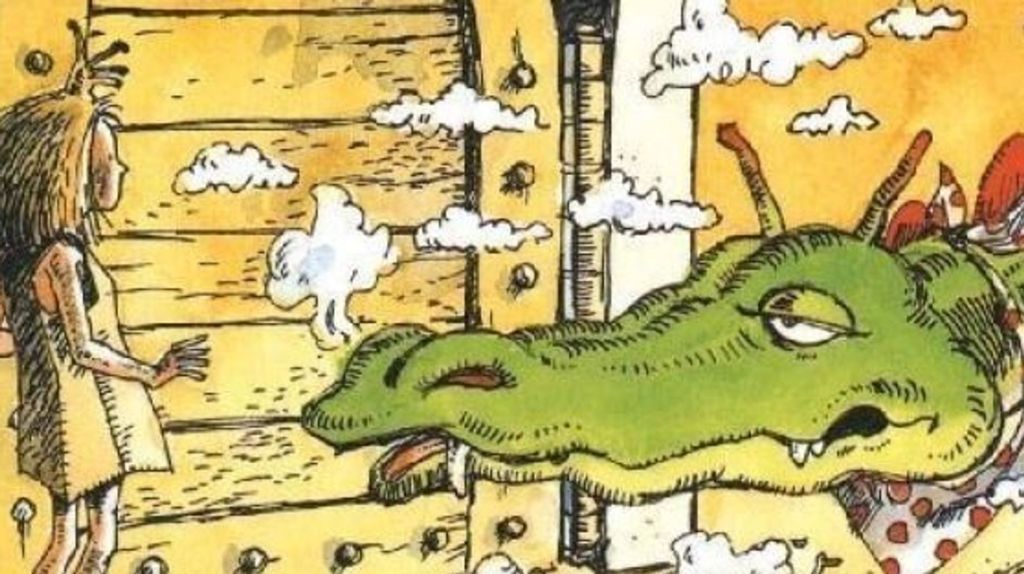
This tale reminds me of life in general when a girl likes a boy who doesn’t like her back and how it should not stop her from being herself, especially if she is clever enough to thwart a dragon.

#5. The Five Chinese Brothers

This tale is based off of an old Chinese folktale called The Ten Brothers. I remember reading this as a child and was horrified at the many methods of execution the people used to try and kill the main character, yet I enjoyed how each brother outsmarted the executioners through their individual talents.

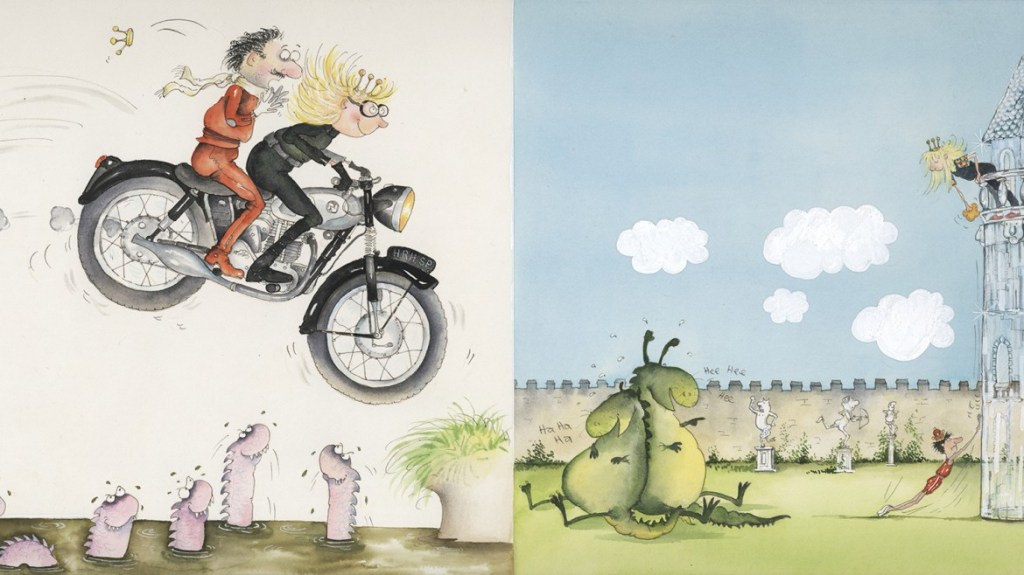
#6. Princess Smartypants

https://babette-cole.com/books-for-sale/princess-smartypants/

This story shows feminism at its finest as we follow an unconventional princess who just wants to remain single and take care of her pets in her castle. However, after her parents admonish her, she decides to put forth challenges for each potential suitor to accomplish.

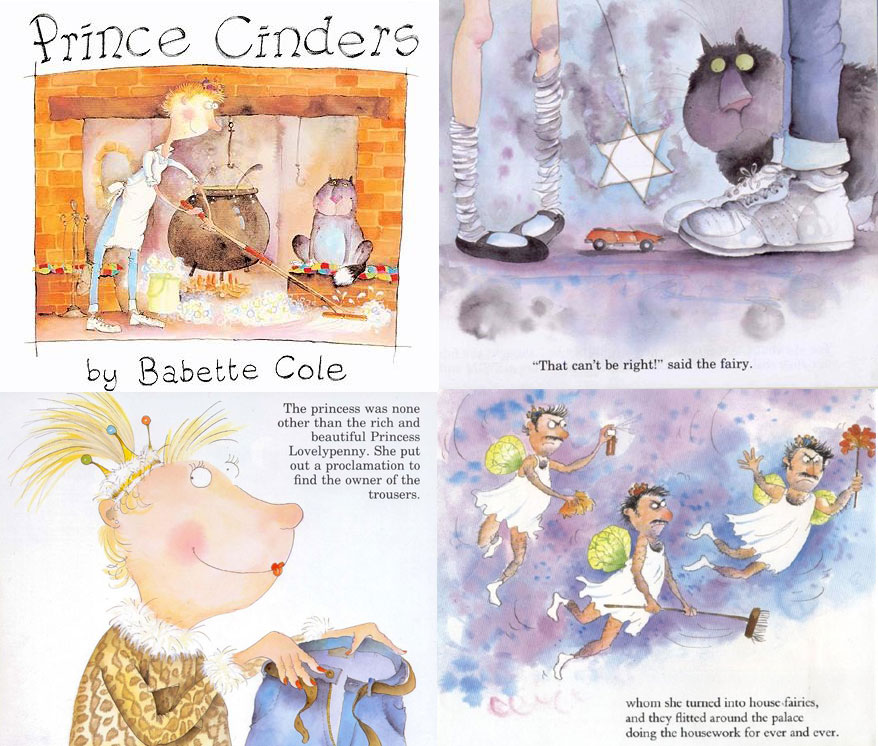
#7. Prince Cinders

https://www.childmags.com.au/7-books-for-the-mini-feminist/

A flip-flopped tale of Cinderella, this story manages to add some new twists that include a clumsy fairy godmother, a giant monkey, and some missing trousers.

Christ-Centered Historical Fiction TBR’s

Prior to Easter, I’ve been watching the new The Chosen series about the life of Christ and his apostles. There are things I like about it, like the fact that it focuses on the apostles and shows Jesus in a more human light. However, sometimes I wonder if they are trying too hard to be humorous. Regardless, it got me thinking about all the books I have in my historical fiction section of my bookshelf about the life of Jesus that I have yet to read. Below I’ve listed some I would like to delve further into that revolve around the life of Jesus and those close to Him.

Maximus by Richard L. Black

It’s taken me a few years to get started with this one, but I’ve been delving back into it. This story follows a Roman centurion and a Jewish girl whose stories bring them together and to a man named Jesus of Nazareth.

The Kingdom and the Crown Series by Gerald N. Lund

This series is set in the backdrop of Christ’s mortal ministry and follows various characters as they grapple with family dynamics and their livelihood while testing their faith in the promised Messiah.

Mary Called Magdalene by Margaret George

In this book we get a glimpse into the life of Mary of Magdalene in a diary-like narrative, from her childhood through adulthood and her journey to becoming a disciple of Jesus Christ.

Risen by Angela Hunt

I loved the movie, so I would like to read the book (which was written by one of my favorite Christian authors and I didn’t even realize it!) about a Roman centurion who is set on a quest to find the body of a crucified man named Jesus, which has mysteriously disappeared.

The Fisherman’s Bride: The Untold Story of the Wife of Simon Peter by Catherine Magia

I think this one speaks for itself. I would like to read a book about Peter and how he was chosen to become the senior apostle of Jesus. But it would also be interesting to read a tale from his wife’s perspective.

The Living Water Series by Stephanie Landsem

This series takes you through three of the events of Jesus’s ministry and the three people whose lives were changed because of Him.

The Weeping Chamber by Sigmund Brouwer

This story follows a man named Simeon who is looking for a miracle and finds one when he encounters Christ during His last hours.

Memoirs of Pontius Pilate: A Novel by James R. Mills

Reflecting on his life, Pilate recounts the story of his encounter with Jesus and his feelings about the event.

The Brother’s Keeper by Tracy Groot

This story is one I’m curious about, seeing as how I am interested in learning more about the siblings of Jesus and how they felt having the Savior as their brother.

The Bronze Bow by Elizabeth George Speare

I’ve already read this one, but since it’s been about 10 years, I think it’s due for a reread. The main character has spent his whole life waiting for the promised Messiah who was prophesied to liberate Israel. He is disappointed to find that this liberator—who he thought would free him from the Romans—is a humble wandering rabbi, until he learns that there is a deeper understanding to this liberation than meets the eye.

Book Review: Maybe This Time by Kasie West

Rating: 3 out of 5.

Contemporary romances are not what I am usually drawn to or even like to read for that matter, but for some reason, I’ve been in the mood to read contemporary romances that have a Hallmark-like air about them.

Summary. Teenage Sophie wants nothing more than to leave her small country town and go to design school in New York City. She saves up for it by working at a local flower shop that provides flower arrangements for annual events, and she wonders if she will ever leave her hometown. However, when she meets the gorgeous—yet superficial, she believes—Andrew, who happens to be the son of a famous caterer who also attends the events, she finds her plans on hold. Is New York really what she wants, or is there another path for her that includes him? This story covers nine months of events and the development of Sophie’s relationship with someone who she believes should be her foe instead of her friend.

Likes

  • Quick read. I read this 350-page book in about 3 days, which is pretty fast for me. The simple language and fluent actions of the story helped me to finish it more swiftly.
  • Simplicity of language. Sometimes it was a little too simple, considering how this was a teen romance, where the author used more teen-friendly language, but it was nice to have a story not too bogged down with description.
  • Cute in places. While it is cheesy and has some cliché one-liners, it’s was nice to read a “proper” romantic comedy that leaves you with a “cute” feeling.

Dislikes

  • Main character is a snob.  “…I thought I owed Andrew an apology, or at least a thank-you. I had offered him neither because, like always, his personality got in the way” (120). Sometimes I wanted to slap the protagonist because she was so rude to the love interest. Don’t get me wrong, sometimes I am rude to guys due to pre-conceived notions about their personalities, but the level of her dislike lasted over their many meetings—many of which he was very gentlemanly towards her. I got to parts of the story where I wanted to shout at her, “get over yourself!” or “you can do better, Andrew!”.
  • Relationship between best friend and love-interest. They both get along—a little too well, I think. Their friendship is very flirty, which I do not think would constitute a purely platonic relationship in today’s teenage drama. It’s nice that the author wanted to make them “flirty friends”, so to speak, but the fact that it didn’t even bother the main character about how close they were made their relationship, and even the story, less believable.
  • Amount of sarcasm. I get that teenagers speak fluently in sarcasm, but it sometimes got quite annoying. Let’s not enable our teenage readers with more of the same thing, please.

Conclusion. Even though this book had some cringe-worthy annoyances (this could be partly due to the fact that a 30-year-old is reading about a romance written for teens), it kept me reading and I am happy that I finished Sophie and Andrew’s story. It left me curious as to what other books Kasie West and other Deseret Book authors of teen romances like her have also written.