Book Review: As You Wish: Inconceivable Tales from the Making of The Princess Bride

Rating: 5 out of 5.

Upon first finding this book at Target under Best Sellers 5+ years ago, I was caught by the unique subtitle: Inconceivable Tales from the Making of The Princess Bride. For real? I thought. I began to read and just couldn’t stop until my mom told me it was time to go. I kept thinking about the book until I finally purchased it a year later. I began it and then stopped once I decided to serve a mission for my church and didn’t pick it up again until three years later. HOWEVER, I am so glad that I finally did. Rarely do readers get memoirs where actors, let alone classic ones like Carey Elwes, reflect upon their experience of one given project in such a detailed way—at least, rarely to my reading eyes.

This memoir not only contains the magical themes that the story of The Princess Bride itself emulates—“fencing, fighting, torture, revenge, giants, monsters, chases, escapes, true love, miracles…”—but also about how the actor who played our beloved Westley filmed certain scenes, his relationships with other actors, the grueling yet rewarding hours of sword-training, and his deep respect for the movie and everybody who contributed to make it the memorably quotable and feel-good film it was. Carey reflects upon his admiration of the director Rob Reiner’s positive and respectful attitude towards cast-members and staff, “falling in love” with Robin Wright who played Buttercup, the epic sword fight with Mandy Patinkin who played Inigo Montoya, his real-life friendship with the gentle giant Andrè, the hysterics involved with working with Billy Crystal as Miracle Max, and of course, his respect and appreciation for the writer of the story William Goldman.

In Carey’s story the reader will learn about the epic stunts and behind-the-scenes tricks that the makers of the film used to capture certain scenes. If the reader is worried about the “magic” being ruined in any way by reading this book in that regard, then maybe they should not read it. But that is my only disclaimer to those who wish to read this book. If the reader has no qualms about that, then I say to go for it!

One thing I appreciated in this book, was how it positively reflected past events and did not contain complaints about the actor’s experience. I’m sure there were many days of downheartedness—a few of which he touches upon, such as his fear of not getting the character right—but the light-hearted and respectful way he portrays his experience is something that I think more writers should do. He also includes blurbs of quotes from other actors/workers on the film which reiterates what, as Christopher Guest, the actor who played the villainous 6-fingered man in the film, comments in the book,

“…Everyone gets to do something that’s memorable in the movie. That’s very unusual and it speaks to the strength of the script…if all the parts are good and they’re done well, it’s going to be so much better than having just two stars and weaker supporting roles.”

Blurb from Christopher Guest, As You Wish, pg. 199

I also admire how Carey ties in the importance of the story with his relationship with his own grandfather, adding to the real-life inspiration this story gives to audience-members of all ages. Like he remarks in the book about how The Princess Bride was meant for audiences both young and old, this memoir, albeit a bit long for a Middle Grade reader, would be beneficial for audience members of all ages, too. No swearing or inappropriate behavior is mentioned (though a couple of times inferred by Billy Crystal), and there are hilarious anecdotes about some humorous situations that occurred, so I say everybody who has watched The Princess Bride and enjoys the satire contained therein to give it a go.


Advice for Fiction Writers: 3 Do’s vs. 3 Don’ts for Making a Good Story

+ Respect the reader’s imagination

A good writer trusts the reader well enough to fill in the blanks when necessary. I’m not implying that the writer purposefully create holes that end up making the whole book a speculation, but use them where credit is due, like when describing scenery, journeys, or other necessary elements that may come off as tedious if drawn out to long. Give us JUST enough description to figure out what is happening—or to plant clues that foreshadow something important later—so that we readers can fill in the blanks. It is your call to decide which of these descriptions will be important to the storyline.

Describing characters or settings. This especially goes for imagining what characters may look like or where they may live. A lot of the time the writer will get lost in making the perfect description of a character (many times, cliché descriptions) such as “her fiery red hair hung to her waist and had a slight curl that covered her shoulders. She wore a crimson gown that buttoned down the back and wore long sleeves that embellished her delicately painted finger-nails…” blah, blah, blah. This always bugs me unless there is a specific reason why her sleeves are long, such as “to hide the scars that lined her arms” or “culture required modesty at all times” or something pertinent to the storyline.

My key point here is, unless there is a specific reason for including fluffy description, take opportunities to invite readers to imagine their own view of the character or setting…or if you’re daring, even talk to the reader every now and then, like “imagine your childhood home; his home was nothing like it”.

+ Use original language.

I recently read a book that rarely used the same words for descriptions, and I think it takes a master of the craft to be able to do this for a novel. NEVER underestimate the power of “like” or “is a”. Example: “His head looked like his neck grew a zit” or “She was a statue.” Don’t forget to use your senses: what does the scene look, sound, feel, smell, and even taste like? If you are ever stuck or need to get your mind flowing regarding creating descriptions, check out Richard Nordquist’s 5 Examples of How to Write a Good Descriptive Paragraph.

+ Make us invest in your characters, both good and bad.

Nobody is going to care about a story they cannot connect to. And characters are the best way to invite readers to establish this connection.

Antagonists: Even though you may not want us siding with your villains, since they work against your protagonist, invite us to engage with them in some way. In real life, the villain you do know is far more common than the villain you don’t know, even if it may seem less dangerous. If you don’t see the point in fleshing out your villain, remember that they are still a main character that will help drive your story and should be as well-rounded as your protagonist. Plus, the more you flesh out your antagonist, your protagonist’s victory against them will only be that much sweeter to the reader. The more we hate the antagonist, the more we love the protagonist.

Protagonists: Please stay away from the cliché and overused character tropes, specifically the ones revolving around the notion: “He was different from the others” or my favorite: “She was nothing, why would he want her?” Ugh. I do not like main characters who do not think very much of themselves and need another character to show them how important they are. Granted, there are stories where this may be an important premise to the development of the plot, and the overall development of the character, but if not done well—or you have no future plans to help this character become independently confident on their own—don’t even think about it!

On the flip-side, please show us the imperfections of your characters in a way that may not be as visible to them; this will help you discover your character’s growth more clearly and help them on their journey to become a dynamic character that we can relate to. People aren’t perfect, so your character shouldn’t be. But please do not have them make bountiful mistakes that serve no purpose to the story other than making them look stupid. Your reader will lose interest in that character quickly.

– Including unnecessary love triangles.

I know this is a common one, but there is a reason that it is: love triangles, if needed, should develop on their own in a story and should not be forced into the story just for the sake of being included. While it’s nice to show some drama between characters (“who will she choose?”), if you make part of the conflict about a fight over the protagonist, then it discredits the other parts of the book that drive the story that would otherwise make the story a stronger piece of literature. In my opinion, the only literature where love-triangles should exist are in books specifically designed for the YA contemporary romance or literary romance genre. The same goes with including unnecessary romances in your book; not everybody needs to fall in love.

– Making your character do something they would NEVER do.

There is some flexibility with this one; you do want your character to surprise others—and maybe even themselves—from time to time, but the important thing to remember here are the words: “from time to time”. If you are at a loss for where to drive your character, so you decide to make them do something COMPLETELY out of character, please reconsider. This becomes harder to accomplish as the story goes on, because the more you develop your characters’ character, the more the reader begins to trust them as well as their decisions. Like you want your readers to trust you as an author, create characters they can trust.

And finally…

– Disrespecting your own laws.

Obeying the laws set in your story is prudent when writing fantasy, sci-fi, and historical fiction. Make sure that what happens in obeys the laws of nature, history, or magic that drives your story.

When writing historical fiction, research is vital. Do not pretend like you know the historical backdrop of the period without first learning about the facts of the year, where the story takes place, and any true historical characters. If you do not wish to include research, then do not label your book as historical fiction.

“With fiction, you can use your imagination to fill in the gaps, explain people’s motives and reasoning, or even make up storylines. However, I feel strongly that what a historical novelist invents should be credible within the context of what is known about the subject.”

-Alison Weir, author of Six Tudor Queens series, Historia Magazine Interview, April 2019

When writing sci-fi or fantasy, world-building is vital. Set laws that magic or “space science” must abide by no matter what occurs in your story. If the story does not cohere with those laws, then change them or set loopholes BEFORE writing the book. Do not simply make up laws as you go, this NEVER helps your story and weakens your setting and plot.

“What will the world look like? How different is it from our own? What new and interesting creatures will inhabit it? What will the people be like? What about the cities and landscape?”

-Tim Hillebrant, “Worldbuilding: How to Create a Believable World for Your Fiction Characters”, The Write Life, August 2019

Those are my thoughts on what I believe does or does not work in fiction. Feel free to take this advice or improve upon it at your leisure. I hope that these points will help aspiring authors in your future fiction-writing endeavors!

July 2020 Reading Vlog

July 23, 2020

Welcome to my first book-reading vlog!

I plan to upload these monthly and talk about what books I have read for the month, are currently reading, and plan to read the following month. I look forward to reading your comments, questions, other book recs, etc. The books I have included in this vlog (along with the links to their Goodreads pages) are below:

The Bone Houses, by Emily Lloyd-Jones

House of Salt and Sorrows, by Erin A. Craig

Blood Countess, by Lana Popović

As You Wish, by Cary Elwes

The Whispered Dance of Bees, by Carol Warburton

Belonging: A German Reckons with History and Home, by Nora Krug

Book Review: House of Salt and Sorrows, by Erin A. Craig

Rating: 4 out of 5.

Wow. This book was definitely different from what I thought it’d be. For one, I didn’t even catch that it was supposed to be a fairytale spinoff until I read the back flap while I was half-way through the story. I had never read the original tale of “The Twelve Dancing Princesses”, but I think this was a very captivating read with many twists and turns that is bound to keep the reader on edge. While there are many elements of the gothic genre in this novel, there is also fantasy and mythology, so I guess this book would fall in the young adult fantasy/horror/gothic/romance/fairytale-spinoff genre?

House of Salt and Sorrows follows 18-year-old Annaleigh and the mystery of the death that constantly surrounds her. As the second-born daughter of a duke of her people, The People of The Salt, she is tasked with many duties, including helping her new stepmother grow accustomed to the strange mourning customs of the province and her Highmoor household. Having lost four sisters already, with the help of her childhood friend, her remaining sisters, and the captivating son of a seafaring captain, Annaleigh embarks on a mission to solve the suspicious death of her most recent sister. However, she soon becomes entangled in the ghostly secrets surrounding her family and finds out that circumstances are not quite what they seem.

Like many readers, I prefer authors to show the reader what is happening in their story instead of telling them; Craig managed to do some of both in an effective way that held my interest. Concerning language, she showed her readers the story by using original word choice and vivid descriptions. For example, on page 167 Annaleigh muses,

“His eyes…fixed me in place like a butterfly

pinned onto a shadow box board.”

House of Salt and Sorrows, page 167

The author also was careful to not give away too much information or send the protagonist on a rant which is very easy to do when writing in first-person. Craig also told us what was happening in the story through making the protagonist reveal to the reader the history about certain information as the story went on; she didn’t just info-dump at the beginning. Executing this language effectively makes for a captivating read and also helps stories like these to flow easily without lagging.

Craig also made good choices concerning content. The love and loyalty of sisterly relationships and the feminine sympathies they share made me emotionally invested with these characters, who were surprisingly well-rounded for being so many. The literary elements of mystery, fear, romance, the supernatural, nightmares, and emotional distress make this book a good example of modern gothic literature.

Concerning the chosen villains, Craig did a good job of guiding my attention to certain characters, making me guess “are they the culprit?”. However, one thing I am not a fan of is how the antagonist is someone who the reader has not learned a lot about and not become slightly if not fully invested with; the more human the antagonist seems, the more connected the reader may become to the story, which creates a stronger investment with the storyline. *spoiler* When I learned that the main villain in this story was a demigod that we only got a little information about midway through the story I was like, ugh, not again. But I was rather relieved when learning that the other main antagonist was somebody that we knew more about and may have even sympathized with in some parts.

I would recommend this book to young adults of maybe 16+, preferably those who aren’t afraid of the dark. I had to sleep with a light on for a couple of nights while reading this, so if the reader does experience night terrors, I would recommend reading the last couple of chapters during the daytime.

All in all, the book’s skilled use of vivid imagery and flowing thought-process of the protagonist made this a good read, even if I did not like some of the content surrounding the antagonists. The overall story was okay, but the way it was told really sold me on the book, so I give it a 4/5. Upon finding this book as a gothic Goodreads recommendation, I was not originally familiar with the author Eric A. Craig. Apparently, she’s a stage manager for operas with spooky themes, which no doubt inspired this book. According to her website, House of Salt and Sorrows was her debut novel and she has another book titled Small Favors coming out next month. I overall like her writing style and would be interested in reading other books from her.

Content Advisory for Future Readers (just in case): *spoilers included*

  • Language: 0.5/5 – One or two words, like “bitch” or “damnation”
  • Sex: 2.5/5 – Some suggestive language; implied sexual encounter; a couple scenes where protagonist observes a sexual situation
  • Violence/Gore: 5/5 – Graphic scenes of childbirth, murder, blood, and dismemberment; disturbing images involving dead bodies; emotional distress in characters
  • Drugs/Alcohol: 2.5/5 – Some references to alcohol; drunk characters

Writing A Story: Inspiration

So, you’ve decided that you would like to write a story. Congratulations! But where do you start?

Whether you have written no more than a sentence or an entire anthology, you have what it takes. Every member of the human race has a story inside of them. But whether or not you can discover it, write it down, and share it is up to you.

But how exactly can you find inspiration? I have a few ideas.

Look for Story Prompts

Pictures

A picture can literally say a thousand words (or more if you story has to be longer). PinterestFlickr, or Unsplash are great websites to find creative images that will help inspire your next story. I always like to make storyboards with just pictures I find on websites. You can always do the old fashioned collage as well.

Quotes & Sentences

During my class’s creative writing time the sixth grade, I was introduced to a type of writing prompt that never failed me in my task to procure a story: the sentence strategy. The teacher would read a quote, each one sentence long, to the class that each of our stories had to include in the text. I always used it as the first sentence of my story to help launch the readers into my tale.

For example, we were given the line: “The curse of the full moon began,” which I used as the first sentence in my short story “Cursed,” a tale about a woman accused of witchcraft and sentenced to be burned at the stake due to the immortality that consumes her every night of the full moon. But luckily, on the night she is sentenced to die, a full moon is shining.

Another sentence, “Gray clouds overlooked the sky,” was the catalyst for my story The Willow House Mystery, which eventually turned into a Middle Grade chapter book I’m working on publishing.

For examples of other story prompts, check out my Tools page. There are also infinite websites dedicated to Story Prompts. Some I like are PinterestPlot Generator, and Writers Write just to name a few.

Other Stories & Fairy Tales

Every great writer got to where they are today because they read about something they liked. So what appeals to you? History? Adventure? Romance? Mystery? And who do you want to read your book? Children? Teenagers? Young Adults? Christians? Atheists? Everybody?

The best way you can decide what kind of story appeals to you is to READ many different kinds of genres. Then you will have that “Aha!” moment when a certain type tickles your creative funny-bone and spawns a new idea in that particular genre.

If you want to tell the story of somebody non-fictional in your own words, try reading biographies and then tailor which person you want to tell a story about to fit the particular audience you wish to reach.

And luckily, since fairytales are public domain, they are fair game to either re-tell or twist into your own imaginative spin.

Don’t Be Afraid to Make Inquiries

While it is never good form to only ever write what you think people would want to read, ask others what kinds of stories they find fascinating and why. You may find a common interest or it may help to confirm and develop the idea for a story you may have been tossing around in your mind.

I recommend subscribing to Freedom with Writing for emails about upcoming literary magazines and contests. If you want to see what kinds of calls for submissions the market is looking for, this is a great resource to inspire a great story!

In addition, someone who you know may want to tell their story but might be too shy or inept to write it themselves, so you could offer your services. It may not be your own story you are communicating, but at least it can be a catalyst to help you get words onto paper and learn the craft of how to organize and craft a whole story.

Listen to Music

This may be an obvious idea to some, but I’m always one who likes to think of far off places and settings that only certain types of music can bring to my imagination.

For example, if I’m in the mood for an adventure plot, while I free write I like to listen to music from Two Steps from Hell (don’t let the name fool you), Audiomachine, or Thomas Bergersen.

Music from alternative bands like Sleeping At LastBastille, or Josh Garrels help inspire my modern fiction pieces.

Also, never underestimate the power that your favorite movie soundtracks can bring to your imagination!

Hate the End of A Story? Write A Different One!

Do you ever experience that moment when you are in the middle of a book or movie and something happens where the character you have come to know and love does something completely against his nature? Like the hero succumbs to the villain’s wrath or changes into the villain or succumbs to the weakness plaguing him the whole story (i.e. Darth Vader, Ross Poldark, Gene Grey–come on you guys!)? You want to pull your hair out because you realize how much better it could have been if only what you wanted to have happen actually happened.

While many of these stories NEED these character flaws to keep the story going, sometimes when I am stuck in this situation I feel like reaching inside the book or movie screen and doing one of those “he could have had a V8” conks on the character’s forehead. But then I realize that I can redeem the quality of this character that I love by instilling it in the one I had in my own imagination and develop it into a story I would want to read.

Of course, I’m not encouraging you to plagiarize in any way another author’s character, just hone the traits you admire in your favorite characters and develop a story and an ending for them that you know they would deserve.

This principle can apply in real life as well. I’m sure that you as well as I deal with your own share of misfortunes every day. If only we could wave the magic wand of wishful thinking and change our circumstances! The great truth is, with words, we can. Which brings me to my next point…

Turn Real-Life Foes & Friends into Fiction

Image result for i will eviscerate you in fiction

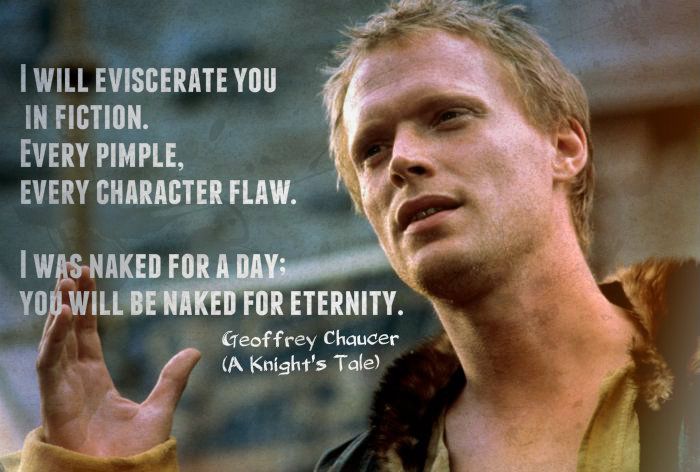
Sometimes when I experience hardship in the form of a bad day at work to the loss of a family member, I find writing out my frustrations really help. I can turn my real-life enemies into fictional villains.

What sweeter revenge is there than to show your enemies–or just real-life bad guys–the error of their ways, which may result in their actually learning from it? Sometimes people do not realize their misdeeds until they are actually faced with them, which may or may not lead them to change.

While those characters of life who choose to remain resolved in their flawed ways will stay the same static, unrounded, and stale villains we read about in fairytales, only the truly dynamically ones will resolve to evolve into the heroes we know and love.

How satisfying will it be to know that you played a hand in that transformation?

Authors like J.K. Rowling, Lewis Carol, and Jane Austen (and I’m sure every other author we know) created timeless characters from important people in their own lives. In a way, when you incorporate names, traits, and stories from true people who have either negatively or positively impacted your life, you are indeed memorializing their names and deeds for all time.

Writing A Story: Crafting Your Characters

What kind of character appeals to you as a reader?

For me, I am always am drawn to a protagonist with an amiable virtue that either matches my own or is one that I hope to aspire to. The same goes for the antagonist, as shocking as that may be. They too may have some flaws or virtues that I may relate to, which could give me a better understanding of the character later on.

The Protagonist

The main character of the story. Normally, the protagonist is the principal focus; we see the story unfold through their eyes. They have their own virtues and faults and they must overcome some kind of obstacle or conflict that presents itself in the story. Once the protagonist does this, they may make the discovery that will help them become the hero that every good tale needs to unfold to the reader, and teach whatever principle the author wishes to get across to their audience.

The Antagonist

The character who impedes the protagonist in some way. Like the latin root of “Pro” in Protagonist means in favor of the character, the “Anti” in Antagonist means standing in opposition to the protagonist in some way.

A lot of times in the story there are more than one antagonist, whether they are a crony of the main antagonist who does their bidding (i.e. Mr. Sir in Holes), or even a force of nature or an object that has a wicked design or purpose on behalf of the main Antagonist (i.e. the ring from The Lord of The Rings).

Supporting Protagonists

I really like creating these characters, sometimes more than the actual protagonist themselves. It can be easy to form many different types of supporting characters while writing in a third-person point of view, or even a limited omniscient prospective. However, sometimes it becomes more difficult developing other characters when writing in first person, or from just one person’s mind. But if you can break down the wall that impedes a reader’s understanding of a character, here are some of my favorites to write and read about:

The Tall, Dark Stranger

Related image

Nothing draws a reader into a story like the presence of a character with a mysterious air about them. Examples include of course the infamous Mr. Darcy of Pemberley in Pride and Prejudice, the brooding Edward Cullen from Twilight (sorry to include that one, but it’s a good example), and the mysterious Hannah Tupper in The Witch of Blackbird Pond.

Many times, especially in popular literature, we see this character unfold as a love interest or even a potential antagonist turned good. The main protagonist focuses their concerns, their attention, and their curiosities on this supporting protagonist, making it easy to draw the reader into the story. Once they hook the audience, they show just how crucial these characters are to the story.

Note: Please don’t just include these characters just to include them; give them a purpose in the story which drives the main protagonist to eventually fulfill their heroic role.

The Charismatic Comic-Relief

Related image

Although this can very well be the main protagonist, like Sir Percy Blankeney in The Scarlet Pimpernel, this character offers laughter and a light-hearted positive outlook to the protagonist during some of the more serious parts of the story. Supportive, who at times chastens the protagonist, some of my favorite examples include the boisterous antics of The Crummles Troupe in Nicholas Nickleby and the witty Martha Sowerby in The Secret Garden.

The Spirit Guide

Best line in the movie

Yoda. Aslan. Jiminy Cricket. Merlin. We have cherished these supporting characters as timeless favorites, and rightly so. They are very powerful characters in the sense that they influence the main protagonist’s choices that will help them discover the virtues that make them the fully immersed characters they are. In essence, they are the character glue that holds the story together.

And of course, if you’re wanting to be adventurous, there is no rule against combining any of these ideas in to one well-rounded character…just be careful about not making your character take on too much; they’re only human after all (most likely).

Characteristics

Now that you’ve chosen your characters, one groundbreaking resource I like to use to delve deeper into the character psyche is a character questionnaire. You can list every trait about your character and be as thorough as you wish. Most of what you come up with, I might add, will never actually be told to your readers, but at least you can use them as key points that will help you drive your story along. 

  • Who has had a lasting impact on your character, that made them into who they are?
  • What circumstances lead your character to their present state?
  • When does your character turn into the hero or the villain?
  • Where did your character learn their traits?
  • Why do they do the things they do?
  • How do they act in accordance with other characters (based off of your answers to the previous questions)?

Tips

Try to shy away from static.

I may be alone in this but I HATE static characters–people supplanted in a story who do not help drive the story whatsoever. To be honest I don’t really see the point of them, unless they are mere background extras.

That is probably why movies with well-acted characters are so appealing to me. I read somewhere recently that the key to creating good characters is to write them as an actor. Good actors delve deep into the minds of the characters they portray and envision some kind of backstory that will add strength and drive to the tale.

Put yourself in EVERY character’s shoes.

This one might sound obvious, but a lot of the time writers actually slack on this. They see their characters from an outside point of view, making the character not as grounded or believable as they had intended.

When I speak of putting yourself in your characters’ shoes, I mean actually making them vulnerable to the audience. Now, I’m not asking you to spill out every detail of the character–you may lose your audience pretty quickly–but give your audience just enough information where they can either infer the rest of the characteristics or, if you want to get really creative, leave a mystery about the character that won’t detract the reader from them, but will be enough to keep them intrigued.

In the case of the antagonist of the White Witch in C.S. Lewis’s The Lion the Witch and the Wardrobe, although we may not be told in the first novel the full story of the her background, we are given just enough information to understand her character. Therefore, we can keep our imaginations busy.

Writing A Story: The Plot

There is obviously not just one way to write.

The ideas I’ve posted below are individual ways to get you started developing your story’s plot. However, these ideas are also dependent on what exactly you would like to develop in your story–plot, characters, conflict, resolution, etc. So, try each one out and see which works best for your story!

Start to Finish

Photo by Lukas Hartmann on Pexels.com

I crafted my most recent first draft of a novel this way, where instead of writing out-of-order scenes that may come to my imagination at different moments of inspiration, I first wrote the Prologue, followed by each chapter, and then the Epilogue all in order from start to finish (which was a bit hard since I had to incorporate flashbacks and other confusing elements).

Keep everything in chronological order for your first draft. Even if you decide to incorporate flashbacks or a backstory later in your book, be sure to have a good idea of your story’s timeline. This helps you stay on track with your ideas as well as character-development.

Don’t worry about describing everything in detail. Writing my story this way was very freeing, in that I could hash out the whole plot of the story without getting distracted by how to make perfect descriptions of the scenery. For example, unless I have the “perfect” description already in mind, I would just write simple sentences and sometimes even overall scene themes like, “Terri finds Nate in the corridor and they make a plan to introduce Jane to the King.”

Finish to Start

How many of you have read a book’s epilogue before even starting the book? This is usually for those of you who do not like to be surprised–that, or the beginning of a book is just so hard to get through, you would like to see if the book is even worth your time and effort to read.

The same works for writing: Where do you want this story to go? How do you want the conflict to be resolved? What moment do all of the characters’ decisions lead up to?

If these are some of the questions you ask yourself when working through your story, then try writing the ending first. Perhaps doing so will better help you to better organize and place each scene exactly where it needs to fall in your story.

One writer’s blog I found actually has what they call a Reverse Outline, which I think could be a very beneficial method for this strategy.

Frankenstein” Your Story

Photo by Lukas on Pexels.com

This is a very common way that writers begin stories; they have a scene or a dialogue in their head and it becomes the inspiration for a whole story. Every now and then you may decide that you want to focus on a particular part of a story before you have hashed out the scenes leading up to it. This can be both beneficial as well as unpredictable: make sure that the scenes your include will make sense to the rest of the story, as well as contribute believably to character-development, once you put them all together.

Beware of creating pieces of your book in different mediums, such as a scene you write in the “Notes” app on your phone, one in Google Docs, one in Word, one in a notebook somewhere. No matter how many scenes you “Frankenstein”, be sure to keep every scene from the same story in one place; that way, you will be better apt to organize your scenes and provide transitions without repeating your ideas and wasting valuable writing time.

Create an Outline

This has one positive and one negative effect: creating an outline may help you organize your thought-process or it may cause you to focus so much on where each event falls that working on the outline may detract you from actually writing your story. However, if sone right, it can be a great help to organizing your story and specifying its details.

Some good story outline templates I have found created from another writing blogger can be found here. There are also good templates from Novel Software that focus on certain story genres, like Mystery, Romance, or Fantasy.

Storyboarding

person holding tablet computer

One way we created outlines in my undergrad screenwriting class was to write every main scene (or one sentence describing each scene) on a sticky-note and then create a rough storyboard about where we wanted those scenes to fall.

You may want to use a storyboarding platform like Studio Binder or Boords.com to get started or find a print-out template if you like doing things by hand.

This can be a good way to organize your story in a non-confusing way and can also provide an opportunity for you to flex your illustrating muscles if you want to get into more visual detail.