
I recently finished this book as a required text for a class I am enrolled in for my Creative writing Certificate, “The Art and Craft of Creative Writing”. I can say that while there are a lot of nuggets of wisdom for the aspiring writer, along with some entertaining anecdotes and scenes from Stephen King’s writing journey, it wasn’t fully my cup of tea. But let’s take a look and you can be the judge!
About
The theme that I observed in these memoirs was what events in his life influenced his writing. He describes some trauma he endured, which may or may not have influenced some of his more fearful tales, but when he started to transition into writing stories for his mother it became clearer how events in his life, like when his mother said, “it was good enough to be in a book” (pg. 29) made him happy enough to pursue writing. King then introduces readers to his own “writer’s toolbox” and informs them of the tricks and tips that helped him on his own writing journey.
Likes/Strengths

“When you write a story, you’re telling yourself the story…When you rewrite, your main job is taking out all the things that are not the story.”
— Stephen King, On Writing, page 57
Stance on editing. I can’t tell you how many times I have fallen into the trap of editing as I write a story for the first time and then just end up getting frustrated and shelving the thing. That’s why I appreciate how King separates what is essential to the story versus what is not as important in this way. It makes me wonder how long books like Les Mis or The Hobbit originally were compared to their epically lengthy finished products they are today.
Drops hints about things that influenced future work. For example, he never comes out and says it, but when he cleans the bathrooms with his friend, his friend imagining breaking through the girl’s bathroom with an ax reminds me very much of Johnny in The Shining. Other times King comes out and says what influenced something like how when he cleaned out the girl’s bathroom, he references a scene from Carrie, when the girls throw tampons at her when she gets her period. In another instance, he says how people describing giant rats in the basement as the size of dogs influenced Night Shift. It’s references like these that keep me going back to the book and finding out what else introduced him to such creepy and memorable stories.
Creating writing symbols or metaphors. “Telepathy” is quite an inventive word to connect the writer with the reader. This “meeting of the minds” (pg. 106) he talks about is a thoughtful way to connect what the reader reads versus what the writer writes or may be implying.
Effectively parallels his accident to his writing journey. He showed how getting better physically helped him get back into his writing routine and move forward with what he loved to do. Or his emotional/mental health was helped through writing again. I especially admire when he follows up with is concept; about how
Writing is “about enriching the lives of those who will read your work, and enriching your own life, as well. It’s about getting up, getting well, and getting over.”
Stephen King, On Writing, page 269
I think this statement resonated with me because it is very applicable to my own situation. I struggle with my mental health, but when I write, it is one of the ways that I feel that I can get my mind well. Keeping your mind well is important and so is writing with a healthy motivation. I’m glad that we saw this vulnerable side of King to better understand not only his memoir, but why writing is so important to him.
Dislikes/Weaknesses
“As it happens, I agree with my mother: profanity and vulgarity is the language of the ignorant and the verbally challenged. Mostly that is; there are exceptions, including profane aphorisms of great color and vitality…”
— Stephen King, On Writing, page 187
Profanity. I agree with this quote to an extent. Just because someone can take liberties with profanity does not mean they should, especially considering their audience. If their characters would say such things, then have them say them, but don’t go overboard. Profanity for profanity’s sake is a waste of words that should add shock value instead of simply filling dialogic space. That is when I see unintelligence.
King relates dialogue to honesty and how an author should always generate honesty in their work. The way that he thinks this can be done most effectively is through the dialogue the characters present. I agree that language is one of the best ways to convey truth, but always consider your characters; how they speak and why they speak the way that they do. Are they ignorant? Smart? Is their language foretelling of future events? Are they the villain or the hero of the story?
Author
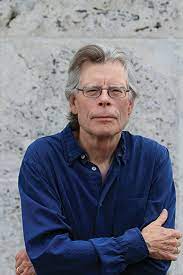
Any horror reader will have at least one of Stephen King’s books in their personal library. King has authored over 50 books, many of which have been adapted onto the big screen. He recently has veered away from writing solely horror and has entered the realm of fantasy with newly released books like The Eyes of the Dragon and Fairy Tale.
Conclusion
Overall, the strong language is what got to me—that and King’s occasional attitude that he is right and other writers are wrong—I know that it’s a memoir, but it is also an instruction manual for writers, so while it is important to show honesty, I wasn’t expecting the language to be that raw and unfiltered. If this is not something that bothers you, I would recommend this book, but if not, I would recommend another alternative memoir/instructional text for a creative writing class.
Content Advisory
| Language | 4/5 |
| Sex | 1/5 |
| Violence/Gore | 3/5 |
| Drugs/Alcohol | 3.5/5 |
